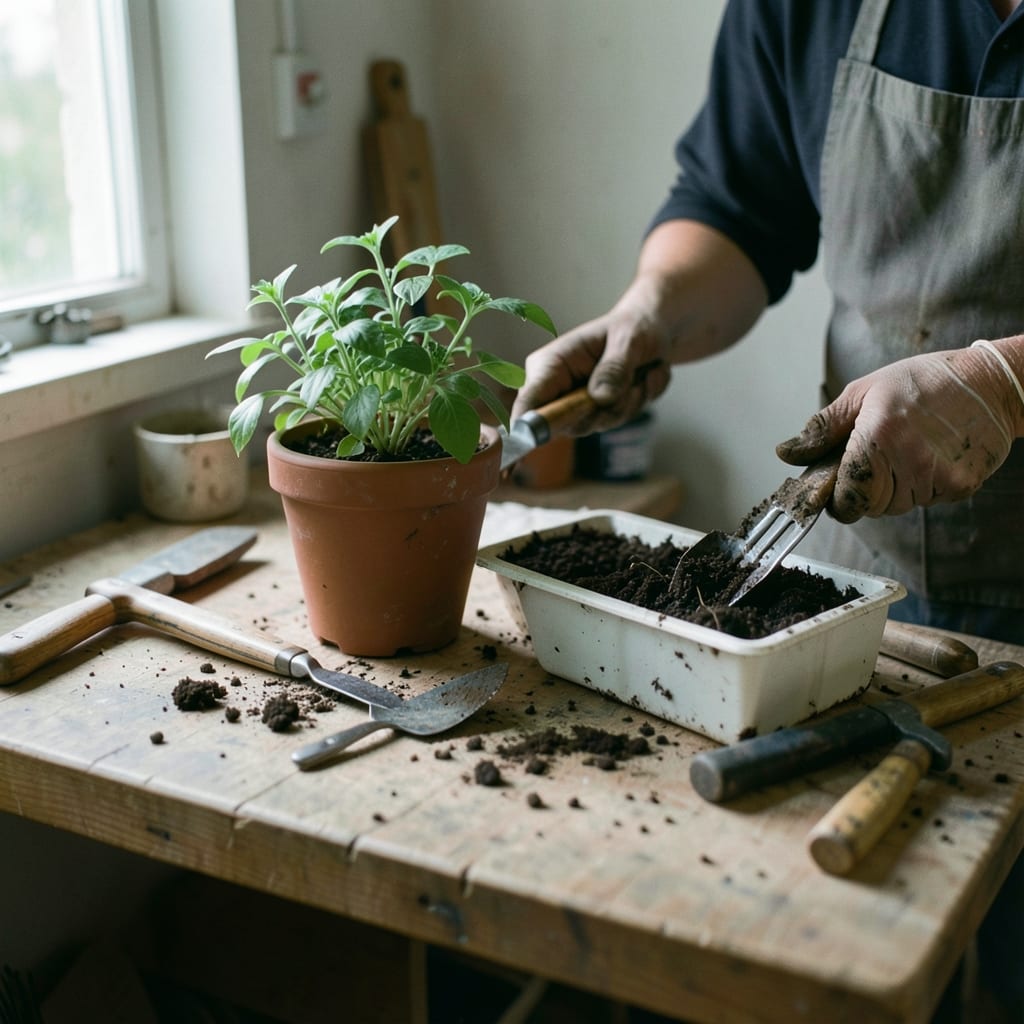
Why I started Seed Grow Guide
I was twenty-five and had just killed my first tomato plant. Not by neglect—no, I’d watered it religiously, turned it toward the sun every morning, even whispered to it like my grandmother taught me.
But the soil was too dense, the roots choked, and by July, it was a sad, drooping skeleton. I took a photo of the wilting stem and sent it to my old college botany professor, Dr.
Elena Vasquez, who’d once grown peppers that won a county fair. ‘You’re overcomplicating it,’ she wrote back. ‘Show me your soil before you show me your plant.’
That email changed everything. I dug up my garden, tested the pH, and realized I’d been treating seeds like they were delicate glass ornaments instead of stubborn little survivors.
So I started *Seed Grow Guide*—not as a rulebook, but as a place to share the messy, real steps that actually work.
This is for the person who’s bought a packet of seeds and stared at it like it’s a puzzle box, for the gardener who’s had a sprout collapse overnight, for anyone who wants to know why their basil keeps bolting or how to coax a zucchini from a single seed.
No fluff, no ‘secret tips’—just what’s happened in my own dirt, and how I fixed it.
Meet the founder

My first gardening lesson came from my grandmother’s sunflower, planted in a cracked terracotta pot on her kitchen windowsill. She’d press the seed into the soil with her thumb, tap the pot twice, and say, ‘Now we wait.’ I was eight, and I waited too long.
By the time I noticed the sprout, it was already leaning toward the light like a drunkard. She didn’t scold me. Instead, she handed me a spoon and said, ‘Dig it up.
See what’s wrong.’ That’s the only rule I’ve kept: if a plant struggles, you get your hands dirty and ask why.
The only tool I’ve never replaced is my grandmother’s bent-handled trowel—the one she used to loosen the soil around her roses. The handle’s splintered, the blade’s lost its edge, but I still use it for transplanting seedlings.
It’s the only thing that’s survived my move from a shared apartment to a backyard plot, and it’s the first thing I pull out when I’m nervous a seed won’t germinate. Superstition? Maybe.
But that trowel’s seen more failures than successes, and it’s still the one that gets the job done.
The method that changed everything was the year I tried growing heirloom beans in my apartment. The seeds took three weeks to sprout, and when they finally did, the vines curled like question marks before collapsing. I panicked, overwatered, and nearly drowned them.
Then I realized the pot had no drainage—and that the ‘morning sun’ I’d promised was actually a fluorescent bulb three feet away. After that, I measured light with a ruler, weighed soil moisture with a spoon, and never trusted a ‘sunny window’ again without checking.
The habit I can’t shake is talking to my plants. Not the poetic kind—no, it’s a running commentary of what’s going wrong. ‘Your leaves are yellow because you’re thirsty, not because I love you,’ I’ll mutter at a wilting basil. My neighbors think I’m eccentric. My plants don’t care.
They just grow.
Meet the mascot

The mascot started as a scribble on a napkin at a diner in Portland, where I was waiting for a soil test to come back. I’d just killed a batch of chili peppers by over-fertilizing, and I was furious.
The first sketch was a lopsided seedling with three leaves and a face that looked like it had just been told it’d never win a blue ribbon. The stem was too thick, the roots were just squiggles, and the whole thing had a grumpy expression—because that’s how I felt.
The proper drawn version came later, on a legal pad in my kitchen. I traced the napkin sketch with a fine-liner, then added a tiny watering can for a hat and a soil clump as a shoe.
The name ‘Sprout McGrump’ stuck because it captured the attitude: this was a plant that had seen things, and it wasn’t impressed. The grumpy face was intentional—gardening is full of disappointments, and I wanted something that didn’t look like it was selling a fairy tale.
For the final version, I simplified everything except the frown. The watering-can hat became a single line, the roots turned into three jagged marks, and the leaves lost their veins.
It had to fit on a browser tab without looking like a child’s doodle, so I erased the shadow under the pot (too busy) and the smudge on the stem (too distracting). The result is Sprout: a seedling that’s survived its own mistakes, and now it’s here to judge yours.
What I promise you
This site isn’t about perfect gardens. It’s about the ones that *almost* work—and how to pull them back from the edge. You’ll find no ‘10 Steps to a Prize-Winning Tomato’ nonsense. Instead, you’ll get the unvarnished truth: what I’ve tried, what failed, and what finally grew.
What you can hold me to
- Every ‘tip’ here has been tested at least twice—in different soils, climates, and light conditions.
- If a method doesn’t work, I’ll tell you why and what I’d do differently next time.
- Soil notes (pH, amendments, drainage) are included because they’re the parts most guides ignore.
- You’ll never see a photo of a ‘perfect’ plant unless I’ve grown it myself—and even then, I’ll point out the flaws.
How I create a guide
A guide starts with a seed packet, a question mark, and a notepad. I don’t begin with research—I begin with a hunch. ‘These beans should grow here,’ I’ll think, or ‘This tomato needs more calcium.’ Then I plant, I wait, and I watch.
The first step isn’t reading a book; it’s getting my hands dirty and seeing what happens.
The first test: planting
The first test is always the soil. I dig a hole twice as wide as the root ball, loosen the bottom with my fingers, and mix in compost at a 1:1 ratio—no exceptions. If the soil’s too dense, I add perlite; if it’s too sandy, I work in coconut coir.
I plant at the same depth as the seedling’s original pot, firm the soil around the roots, and water *slowly* until it drains. No rushing. No guesswork.
If the leaves wilt within 48 hours, it’s either overwatered or the roots were damaged during transplanting—and I’ll tell you how to spot the difference.
The second test: the first signs
After a week, I check for three things: new growth, yellowing leaves, and soil moisture. If the plant’s just sitting there, I’ll adjust the light (a south-facing window isn’t enough for peppers) or recheck the soil pH (a 6.0 reading can stall growth).
If the leaves curl, it’s either too hot or the humidity’s off—I’ll move it under a humidity dome or set up a fan on low. And if the soil’s dry at the surface but soggy below? That’s compacted soil, and I’ll have to aerate it.
No ‘wait and see.’ If something’s wrong, I fix it before it gets worse.
How a page gets onto this site
A guide isn’t finished until it’s been rewritten after a failure. If my zucchini plants bolted, I’ll add a note about heat stress. If my basil turned bitter, I’ll include a section on over-fertilizing.
I write the first draft while the plants are still growing, then cut anything that doesn’t hold up to the ‘so what?’ test. ‘This seedling looks healthy’ isn’t useful. ‘Here’s how to tell if it’s actually healthy’ is. And if a method doesn’t work a second time?
It gets archived—not deleted. Because sometimes, the answer is ‘don’t try that.’
Write to me
I love hearing about the plants that defied the odds—or the ones that didn’t. Send me a photo of your sad, stubborn tomato, or tell me about the time your seedlings outgrew their pots before you even noticed.
The contact page is where to share your wins, your disasters, and your ‘I have no idea what’s happening’ moments. Just don’t ask me to recommend a fertilizer. I’ve got enough scars from that.
Thanks for growing along with me.
Stanley Jensen
The guides are grouped by category: Advice, Aphids, Blooming, Companion Plants, Container Gardens and Diseases.