
Lawn
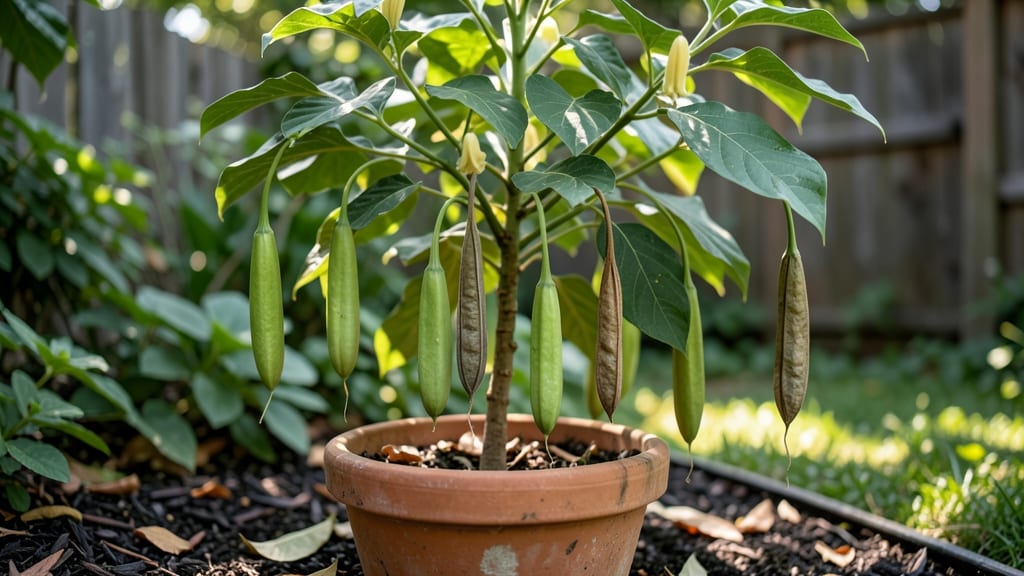
Harvesting Brugmansia seed pods without the frustrating twist-and-pull struggle is the secret to viable seeds. 🌿 I’ve learned that patience and the right timing make all the difference—skipping this step means seeds that won’t sprout or plants that flop.
The pods start green, turn yellow, and finally brown when they’re ready, but forcing them too early ruins everything.
First, let the pods dry on the plant until they’re completely brown and papery—this usually takes 6-8 weeks after flowering. Then, gently twist them off (they’ll release easily when ripe) and crack them open to reveal the black, bean-like seeds inside.
Store them in a cool, dry place in a sealed container for up to 2 years—they’ll stay fresh and ready to grow whenever you’re ready.
Germination is where most people trip up: soak the seeds in warm water for 24 hours before planting to break dormancy. Use a well-draining mix of peat and perlite, keep the soil consistently moist (not soggy), and expect sprouts in 4-8 weeks.
The key is consistency—too much water kills them, too little stalls growth.
Once your seedlings hit 4-6 inches, transplant them into individual pots with bright, indirect light. They’ll grow fast, but be patient—Brugmansia from seed takes 2-3 years to flower, but the reward is worth it.
Troubleshoot yellowing leaves by checking for overwatering or pests, and always use gloves when handling the pods (they’re toxic!).
📚 In This Guide
- What you need
- Instructions
- Tips and common mistakes
- Wrapping up and next steps
What you need
- ● Mature brugmansia seed pods: 5–10 fully ripe, brown, and slightly papery pods (harvest when they split open naturally or are dry and crispy).
- ● Sharp pruning shears or garden scissors: 1 pair (sterilized with rubbing alcohol for hygiene).
- ● Paper grocery bags or breathable mesh bags: 2–3 bags (to collect seeds and pods without crushing them).
- ● Labeling tags or masking tape + marker: 1 pack (to label bags with plant variety and harvest date).
- ● Plastic or glass storage containers: 1–2 airtight containers (for long-term seed storage; opt for 4–6 oz size).
- ○ Silica gel packets (optional but recommended): 1–2 packets (to absorb moisture and extend seed viability).
- ● Paper towels or coffee filters: 1 roll (for drying seeds if needed).
- ● Rubbing alcohol (70% isopropyl) and cotton swabs: 1 bottle + swabs (for sterilizing tools).
- ● Glove box or thick gardening gloves: 1 pair (to protect hands from sap and thorns).
- ● Magnifying glass: 1 (for inspecting seeds for pests or damage).
- ● Seed viability test kit: 1 (e.g., a simple saltwater float test to check seed quality).
- ● Notebook or gardening journal: 1 (to track harvest dates, storage conditions, and germination notes).
- ● Humidity pack or desiccant: 1 (for ultra-dry climates to prevent mold).
Step-by-step instructions for harvesting brugmansia seed pods
Here’s how to collect and store brugmansia seeds without the messy twists and spills.
🌿 Step 1: Identify and Wait for Ripe Pods
Brugmansia seed pods mature when they turn from green to a papery brown and begin to split open naturally. Wait until the pod is fully dry to the touch—this ensures seeds are fully developed and viable. I like to check pods weekly once they start changing color, as they can open within hours of reaching maturity.
Look for pods that are slightly wrinkled and make a faint crackling sound when gently squeezed. If the pod still feels firm or green inside, it’s not ready. Harvesting too early results in seeds that won’t germinate, so patience here pays off. Use a small garden knife or pruning shears to snip the pod cleanly from the stem, leaving a short stub to prevent disease entry.
🪴 Step 2: Extract Seeds Without Damaging Them
Once the pod is fully dry, place it on a clean, flat surface like a cutting board or paper towel. Brugmansia pods are delicate—don’t squeeze them or they’ll shatter into a sticky mess. Instead, use your fingers to gently peel open the pod along its natural seams, working from the widest point outward.
Inside, you’ll find a gelatinous mass filled with tiny, flat seeds. Carefully scoop out the seeds with a spoon or your fingers, avoiding the slimy membrane that surrounds them. Spread the seeds on a paper towel to dry for 24 hours in a warm, shaded area. This step is critical—moisture will cause seeds to mold before storage.
💧 Step 3: Clean and Prepare Seeds for Storage
After drying, rinse the seeds under cool water to remove any remaining gel. Use a fine-mesh strainer to separate seeds from debris, then pat them dry with a paper towel. Brugmansia seeds are incredibly light, so avoid rubbing them vigorously—gentle handling prevents damage to the delicate seed coat.
Once dry, transfer the seeds to a small envelope or airtight container. Add a silica gel packet to absorb any lingering moisture, which helps maintain viability. Label the container with the date and brugmansia variety—seeds can remain dormant for 1-2 years if stored properly in a cool, dark place like a refrigerator.
⏰ Step 4: Store for Long-Term Viability
Place the sealed container in a cool (40-50°F) and dry environment, such as a refrigerator or seed vault. Brugmansia seeds lose viability quickly in heat or humidity, so avoid storing them in basements or garages where temperatures fluctuate. Check the container every 3 months to ensure no mold has developed.
When you’re ready to plant, soak the seeds in warm water for 12 hours to soften the hard outer shell. This step mimics natural rainfall and significantly improves germination rates. Brugmansia seeds are finicky—don’t rush the process. With proper storage, you’ll have fresh seeds ready for spring planting year after year.
Tips & tricks for perfect brugmansia seed pod harvesting
Here's what I learned after years of trial-and-error with these delicate pods—these tricks will save you from sticky disasters.
Pod Maturity Test: The wrinkled texture and faint crackling sound when squeezed are your best indicators of readiness. I've learned to check pods every 3-4 days once they start turning brown—some varieties open within hours of reaching maturity, so don't wait until they're fully split open. Confession: I skipped this step once and ended up with seeds that refused to germinate.
Handling Technique: Brugmansia pods are deceptively fragile—never squeeze them! Instead, use your fingers to gently peel along the natural seams starting from the widest point. Think of it like opening a delicate book rather than crushing a soda can. I've ruined three batches by being too aggressive, so take your time here. The gelatinous interior will release easily if you're patient.
Drying Strategy: The 24-hour drying period is non-negotiable for mold prevention, but here's the secret: spread seeds on a paper towel in a single layer and place them in a warm, shaded spot with good airflow. A sunny windowsill works perfectly—just avoid direct sunlight which can overheat them. I've found that using a small fan on low speed helps maintain even drying without disturbing the seeds.
Storage Wisdom: While the instructions mention 1-2 years of viability, I've had seeds last up to 3 years when stored properly. The key is consistent temperature control—never store near appliances that generate heat. I keep mine in the crisper drawer of my refrigerator where it stays around 40°F. The silica gel packet is crucial, but I also add a tiny packet of uncooked rice to absorb any excess moisture that might develop over time.
Pro Tips for Brugmansia Seed Pods
- Here's what I learned after years of trial-and-error with these delicate pods—these tricks will save you from sticky disasters.
- Pod Maturity Test: The wrinkled texture and faint crackling sound when squeezed are your best indicators of readiness.
- Handling Technique: Brugmansia pods are deceptively fragile—never squeeze them!
Frequently asked questions
Got questions about harvesting, storing, or working with brugmansia seed pods? You’re not alone! Here are some of the most common queries—and their answers—to help you navigate the process like a pro.
Are brugmansia seed pods toxic like the rest of the plant?
The good news is that brugmansia seed pods are not as toxic as the leaves or flowers, but they still contain trace alkaloids. Wear gloves when handling them, and avoid ingesting any part of the plant. If you’re growing them for seeds, focus on the pods themselves—just keep them away from pets and kids!
How long does it take for brugmansia seed pods to mature?
Seed pods typically mature 4–6 months after flowering, depending on your climate. In warm zones, they may ripen faster (as early as 3 months), while cooler regions could extend the timeline. Look for pods that turn brown and papery—that’s your cue to harvest!
What’s the best way to store brugmansia seeds long-term?
Once harvested, let the pods dry completely (1–2 weeks in a cool, dark place), then crack them open to remove the seeds. Store seeds in a paper envelope or airtight container with a desiccant packet in the fridge. They’ll stay viable for 1–2 years if kept dry and cool.
Can I grow brugmansia from seed pods without starting them indoors?
While possible in USDA Zones 9–11, direct sowing is risky due to slow germination and frost sensitivity. For best results, start seeds indoors 8–10 weeks before last frost in a warm, humid environment. Brugmansia thrives in heat, so don’t rush it—patience pays off!
Why did my brugmansia seed pods shrivel or fall off before ripening?
This usually happens due to pests (slugs, aphids), disease, or environmental stress (like extreme heat/drought). Check for holes, mold, or wilting leaves. If caught early, treat with neem oil or improve growing conditions. If pods are already damaged, focus on protecting next year’s flowers!
Wrapping up and next steps
Harvesting brugmansia seed pods doesn’t have to be a tangled mess—with the right tools and techniques, you can collect, dry, and store seeds year-round for future planting.
Whether you're a seasoned gardener or a curious beginner, these pods hold the promise of vibrant blooms and lush foliage. Ready to grow? Start by gathering your supplies, follow the twist-free method, and soon you’ll be enjoying the beauty of brugmansia in your garden! 🌱
Your next step? Try it out! Experiment with different drying methods or share your tips with fellow gardeners. Happy growing! 🌿