
Lawn
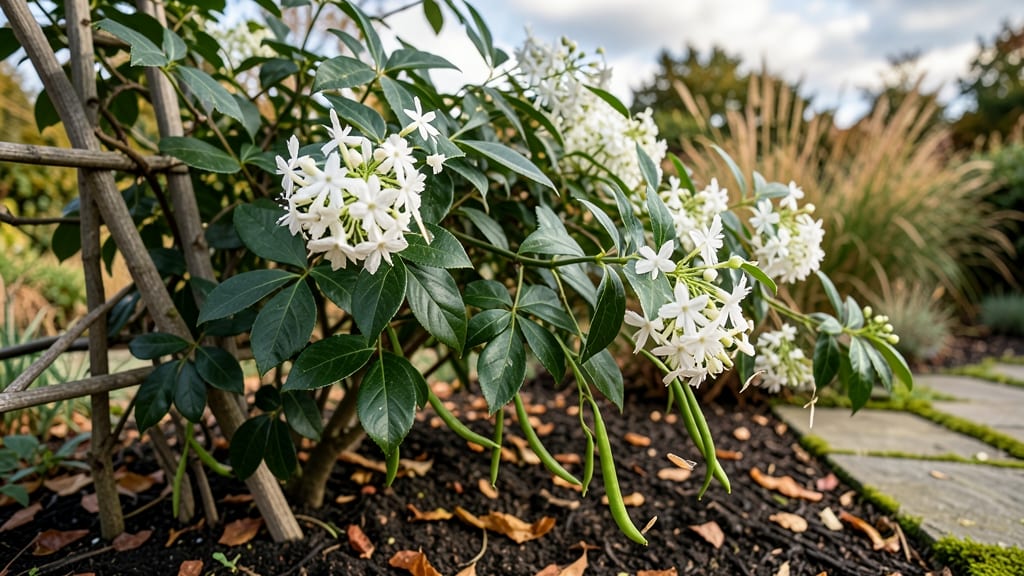
When Confederate jasmine seed pods turn brown and papery, that’s your cue to harvest them for next year’s fragrant vines. 🌿 I’ve learned the hard way that skipping this step means waiting another full year for those intoxicating blooms—so I now collect pods every fall, dry them properly, and store them until spring planting.
The key to success lies in patience: these seeds need a 6-8 week cold stratification to break dormancy, mimicking winter’s natural process. You’ll need a well-draining mix of sand and peat moss for planting, plus a warm, bright spot for seedlings once they sprout.
Germination rates are low (expect 10-30%), so starting with fresh pods and proper storage makes all the difference. By spring, you’ll watch tiny green shoots push through the soil, their scent already hinting at the sweet fragrance to come.
The first blooms arrive 18-24 months after planting, but the wait is worth it for vines that climb 20 feet and perfume your yard all summer. If seeds prove tricky, cuttings are a foolproof alternative—just take 4-6 inch tips in early summer and root them in water.
Either way, you’ll end up with vines that bring back memories of Southern summers.
📚 In This Guide
- What you need
- Instructions
- Tips and common mistakes
- Wrapping up and next steps
What you need
- ● Mature Confederate jasmine seed pods: Harvest only fully ripened pods (they’ll turn brown and dry on the plant). Aim for 5–10 pods per batch for optimal drying.
- ● Paper bags or breathable mesh bags: Use kraft paper lunch bags (1–2 per pod) or seed-saving mesh bags (1 bag for 3–5 pods). Avoid plastic—it traps moisture!
- ● Drying location: A cool, dry, and well-ventilated spot (e.g., a shaded porch, garage, or indoor shelf). Avoid direct sunlight or humidity.
- ● Small paintbrush or soft toothbrush: For gently brushing out seeds after drying.
- ○ Air-tight storage containers: Glass jars with tight lids (like mason jars) or envelope-style seed packets with silica gel packets (optional but recommended).
- ● Labeling supplies: Masking tape + permanent marker or printable seed labels to track pod sources and harvest dates.
- ● Desiccant packets: Toss a few into storage containers to absorb excess moisture and extend shelf life.
- ● Fine-mesh strainer: For sifting out debris if seeds get dusty during handling.
- ○ Humidity monitor: A small digital hygrometer (optional) to ensure your drying space stays below 50% humidity.
Step-by-step guide to harvesting and storing Confederate jasmine seed pods
Here's how to preserve those fragrant pods so you can grow more of this classic Southern vine next year.
🌿 Step 1: Identify and Harvest Ripe Seed Pods
Confederate jasmine pods turn from green to a papery brown when fully mature—this usually happens in late fall after the flowers fade. Gently twist the pods from the stems (don't pull hard, or you'll damage the vine). You'll know they're ready when they release seeds easily with just a light tug. Harvest on a dry day so moisture doesn't cling to the pods.
I collect pods in a paper bag and leave them in a shaded spot for 24 hours to dry completely. This prevents mold from forming when you store them later. If you see any pods still green, leave them on the vine—they won't produce viable seeds until fully ripe.
🌱 Step 2: Dry the Pods Thoroughly
Spread the harvested pods in a single layer on a mesh screen or paper towels in a warm, dry place with good airflow. A sunny windowsill (out of direct sunlight) works perfectly. Turn the pods every 1-2 days to ensure even drying. They're ready when the outer shell feels brittle and the seeds rattle inside when shaken.
This process takes about 7-10 days depending on humidity. If your climate stays damp, speed things up with a dehydrator at 95°F for 4-6 hours. Just don't overdo it—the seeds need to stay intact, not turn to dust.
🪴 Step 3: Store Pods in Airtight Containers
Once completely dry, place the pods in a small glass jar or airtight container with a silica gel packet to absorb moisture. I like to add a fold of tissue paper between layers to prevent pods from touching directly. Label the container with the year and store it in a cool, dark place like a pantry or basement.
Properly stored pods stay viable for 2-3 years, though germination rates drop after the first year. Check periodically for signs of mold or pests—if you see any, transfer the pods to a fresh container immediately.
☀️ Step 4: Test Germination Before Planting
In early spring, test a few pods by soaking them in lukewarm water for 24 hours to soften the outer shell. Plant them ½ inch deep in moist potting mix and keep the soil at 70-75°F. Germination takes 2-4 weeks—you'll see tiny shoots emerge when conditions are right.
If the pods don't sprout after 6 weeks, they've likely lost viability. Don't worry—just try a few more. Confederate jasmine is forgiving, and even if some don't germinate, you'll still have plenty of seeds for next year's attempt.
Tips & tricks for perfect Confederate jasmine seed pod preservation
Saving Confederate jasmine seeds for next season doesn't have to be a guessing game—these practical tricks will help you preserve them properly every time.
Harvesting Tip: I've learned the hard way that harvesting on a dry day is non-negotiable. Moisture trapped in the pods during collection leads to moldy storage containers later. If you've harvested on a damp morning, spread them out for the full 24 hours before storing—don't rush this step, even if you're eager to begin drying. The extra hour or two prevents future headaches with mold.
Drying Strategy: When using a dehydrator at 95°F for 4-6 hours, I recommend checking pods after 3 hours first. Some varieties dry faster than others, and you want to avoid turning those seeds into dust. Place a small bowl of water in the dehydrator to maintain humidity levels—this helps prevent the pods from becoming too brittle too quickly. A gentle shake should make seeds rattle, not fall out like confetti.
Storage Wisdom: That silica gel packet in your storage container isn't just for show—it's your moisture barrier. I've found that adding an extra packet if you live in a humid climate makes all the difference. Also, consider using small glass jars with tight-sealing lids rather than plastic containers. Glass doesn't absorb odors, and Confederate jasmine seeds stay fresher longer in glass storage. The tissue paper between layers is another game-changer—it prevents pods from sticking together and makes it easier to separate them when planting time comes.
Germination Test: When testing germination in early spring, I always prepare a backup batch of pods. If your first test fails after 6 weeks, you'll want fresh pods ready to go. Keep a small notebook by your germination test—record the date you planted each batch and any variations in conditions. This helps you track which years your seeds perform best, especially if you're trying different storage methods.
Pro Tips for Confederate Jasmine Seed Pods
- Saving Confederate jasmine seeds for next season doesn't have to be a guessing game—these practical tricks will help ...
- Harvesting Tip: I've learned the hard way that harvesting on a dry day is non-negotiable. Moisture trapped in the pod...
- Drying Strategy: When using a dehydrator at 95°F for 4-6 hours, I recommend checking pods after 3 hours first. Some v...
Frequently asked questions
Got questions about harvesting, storing, or growing Confederate Jasmine seed pods? You’re not alone! Here are the most common queries—and their answers—to help you save those fragrant blooms for next season with ease.
When is the best time to collect Confederate Jasmine seed pods?
Harvest seed pods when they turn brown and papery (late fall to early winter). Avoid collecting them too early—they won’t be fully mature, or too late, as they may crack open and release seeds prematurely. Aim for a dry, overcast day to prevent moisture issues during storage.
How do I properly dry Confederate Jasmine seed pods before storing?
Spread pods in a single layer on a mesh screen or paper towels in a cool, dry, well-ventilated spot (like a garage or basement). Avoid direct sunlight or heat sources—this can cause them to dry too quickly and crack. Drying takes 1–2 weeks; pods are ready when they’re brittle to the touch.
Can I store Confederate Jasmine seed pods in the fridge or freezer?
Nope! Seed pods do not need refrigeration or freezing. Store them in a paper bag or envelope in a cool, dark place (like a pantry or seed drawer). Just keep them dry—humidity is their enemy! Viability lasts 1–2 years if stored correctly.
What if my Confederate Jasmine seed pods won’t germinate?
Try these fixes:
- Stratification: Mimic winter by refrigerating pods in a damp paper towel for 4–6 weeks before planting.
- Freshness: Older pods (over 2 years) may lose viability—test a few to see if they sprout.
- Soil mix: Use a well-draining blend (like 50% perlite + 50% potting soil) to prevent rot.
Are there alternatives to growing from seed pods?
If seed pods aren’t your thing, try:
- Cuttings: Snip 4–6 inch stems in spring or early summer, dip in rooting hormone, and plant in moist soil.
- Layering: Bend a low-growing branch to the ground, cover with soil, and wait for roots to form (takes 3–6 months).
- Buy a plant: Nurseries often sell Confederate Jasmine (Trachelospermum jasminoides) as mature shrubs for instant fragrance!
Wrapping up and next steps
Harvesting and storing Confederate jasmine seed pods is a rewarding way to nurture fragrant blooms year after year! With the right timing and care—like drying pods in a well-ventilated space and storing them in airtight containers—you’re setting the stage for next season’s sweet, intoxicating flowers. 🌸
Ready to turn your garden into a sensory paradise? Start by planting your saved seeds in early spring—just follow the same simple steps you used to harvest them. Happy gardening!