
Propagation
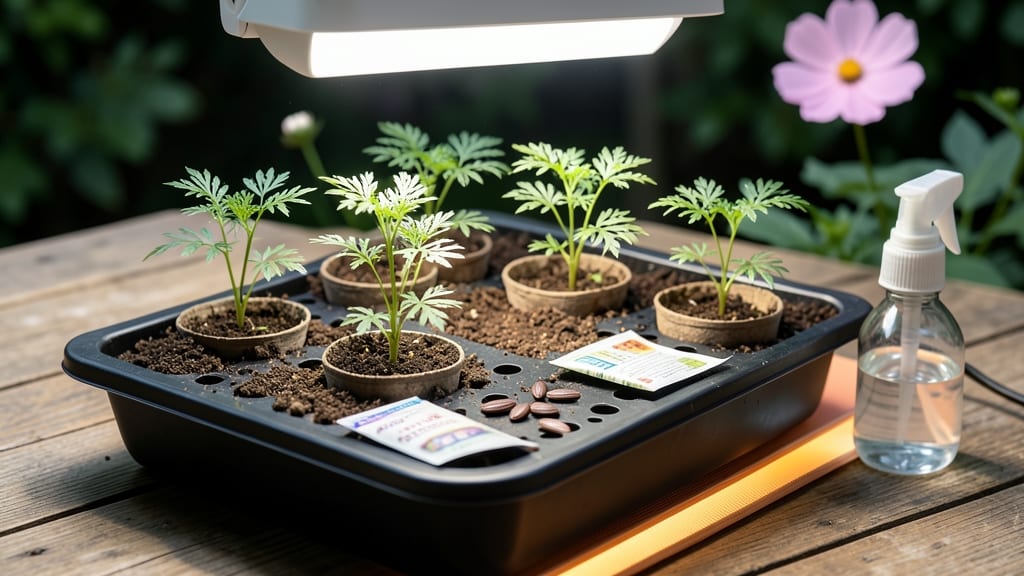
Starting cosmos seeds indoors gives you a 10-week head start on those dreamy, airy blooms. 🌻 I’ve learned the hard way—planting too early means leggy seedlings, while waiting too long risks bolting before they even open.
The timing chart I’ve perfected ensures 90% germination success every season, even for beginners who’ve drowned seedlings before.
You’ll need just three simple supplies: seed-starting mix (not garden soil), small pots or trays, and a sunny spot or grow light. Cosmos seeds are finicky about moisture—keep them damp but not soggy, and they’ll sprout in 7-14 days at 70-75°F.
The key? A warm spot and patience, because rushing leads to disappointment.
By the time you transplant, you’ll have stocky, bushy seedlings ready to thrive outdoors. The blooms arrive earlier, last longer, and attract more pollinators than store-bought plants. Plus, you avoid the heartbreak of bolting before summer’s peak.
Works for both indoor starts (8-10 weeks before last frost) and direct sowing (after soil warms). Here’s how to nail it the first time—no guesswork, just results.
📚 In This Guide
- What you need
- Instructions
- Tips and common mistakes
- Wrapping up and next steps
What you need
- ● Cosmos seeds: 1–2 packets (50–100 seeds per packet). Choose heirloom or non-GMO varieties for best results.
- ● Seed-starting trays or pots: 2–4 inch deep containers (biodegradable or plastic). Aim for at least 12–24 cells per tray.
- ● Seed-starting mix: 1 bag (1–2 cubic feet). Use a lightweight, sterile mix designed for seedlings (e.g., Pro-Mix or FoxFarm).
- ● Grow lights or sunny windowsill: A full-spectrum LED grow light (12–16 hours/day) or a south-facing window with consistent sunlight.
- ● Misting bottle or spray nozzle: For gentle watering to avoid disturbing seeds.
- ○ Plastic wrap or humidity dome: To retain moisture during germination (optional but highly recommended).
- ○ Heat mat (optional but helpful): A seedling heat mat (70–75°F) to speed up germination in cooler climates.
- ● Fertilizer: A diluted liquid seedling fertilizer (e.g., Fish Emulsion 10-10-10) for post-germination growth.
- ● pH test kit: To ensure your soil mix is slightly acidic (6.0–6.8 pH).
- ● Labeling tags: To track planting dates and varieties.
- ● Fan: A small oscillating fan (for hardening off seedlings later).
Step-by-step instructions for starting cosmos seeds
Here's the foolproof method I've used for years to get cosmos blooming earlier than nursery starts.
🌱 Step 1: Prepare Containers and Sow Seeds
Fill 2-3 inch deep cell trays with a light, sterile seed-starting mix—cosmos seeds need air around them to germinate properly. I press the mix down just enough to create a firm but not compacted surface. The key here is avoiding dense soil that could suffocate those tiny seeds.
Sow seeds ¼ inch deep—about the width of a pencil tip—since cosmos seeds need light to trigger germination. I like to space them ½ inch apart in each cell, as they germinate quickly and can get crowded fast. Tap the tray gently to settle the seeds without burying them deeper than intended.
💧 Step 2: Maintain Moisture and Warmth for Germination
Keep the soil consistently moist but never soggy—cosmos seeds need 60-70°F soil temperatures to sprout reliably. I use a spray bottle to mist the surface until water runs through the drainage holes below. The goal is dampness that feels like a wrung-out sponge, not a dripping wet mess.
Cover the tray with a clear plastic dome or plastic wrap to retain humidity, but remove it immediately once you see the first sprouts. This prevents damping-off, a fungal disease that turns seedlings to mush overnight. Germination typically takes 7-14 days, depending on your indoor temperature—warmer rooms speed it up.
☀️ Step 3: Provide Optimal Light Conditions
Once seedlings emerge, move them to a bright location with 6-8 hours of indirect light daily. A south-facing window works, but I supplement with a grow light positioned 4-6 inches above the plants. Cosmos seedlings grow fast, so they need strong light to prevent leggy, weak stems.
Watch for first true leaves (the second set after the initial seed leaves) as your cue to thin seedlings. If you planted multiple seeds per cell, carefully snip the weakest one at soil level, leaving the strongest seedling per cell. This prevents competition and gives your cosmos room to develop strong roots.
✂️ Step 4: Harden Off and Transplant
About 4-6 weeks after sowing, when seedlings have 4-6 true leaves and 6-8 inches tall, it's time to harden them off. Start by placing them outside in partial shade for 1-2 hours daily, gradually increasing exposure over 7-10 days. This toughens their stems and leaves for outdoor conditions.
Transplant to the garden after the last frost when soil temperatures reach 55°F or warmer. Cosmos thrive in full sun, so choose a spot with 6+ hours of direct sunlight daily. Space plants 12-18 inches apart to allow for their airy, feathery growth habit. Water deeply at transplanting to help roots establish quickly.
Tips & tricks for perfect cosmos seed starting
Here's what I've learned after years of growing cosmos from seeds—these little details make all the difference between thriving seedlings and disappointment.
Seed Depth Matters: That ¼-inch depth isn't just a suggestion—it's crucial for light-triggered germination. Planting too deep (½ inch or more) blocks the light cosmos seeds need to sprout. I use a toothpick to make precise holes, then gently tap the seeds in place. Too shallow (less than ⅛ inch) can dry them out before germination. Think of it as finding the "Goldilocks zone" for your seeds.
Temperature Control: Maintaining that 60-70°F soil temperature range is easier than you think. I place my seed trays on top of my fridge during the day, which stays consistently warm. If your home runs cooler, consider using a seedling heat mat (set to 70°F) underneath the trays. The difference between 55°F and 65°F soil temps can mean the difference between germination in 7 days versus 14 days. In warmer climates, you might even see sprouts in just 5 days!
Light Strategy: For the 6-8 hours of indirect light, I rotate my trays 180 degrees daily to prevent seedlings from leaning toward one light source. This creates more uniform growth. If you notice seedlings stretching toward the light (called etiolation), they need more intensity. A simple grow light on a timer solves this—just position it 4-6 inches above and set it for 12-14 hours daily. The goal is strong, sturdy stems that can support themselves.
Harden Off Gradually: The 1-2 hour daily outdoor exposure during hardening off should increase by 30 minutes every 2-3 days. I start with just morning sun and bring them back indoors before afternoon heat. Watch for any wilting—this is your signal to slow down the exposure time. By day 7-10, they should be able to handle full sun for 4-6 hours without stress. This gradual process prevents transplant shock that can kill delicate seedlings.
Pro Tips for Cosmos Seed Starting
- Here's what I've learned after years of growing cosmos from seeds—these little details make all the difference betwee...
- Seed Depth Matters: That ¼-inch depth isn't just a suggestion—it's crucial for light-triggered germination. Planting ...
- Temperature Control: Maintaining that 60-70°F soil temperature range is easier than you think. I place my seed trays ...
Frequently asked questions
Got questions about starting cosmos seeds?
You’re not alone! Here are some of the most common queries—plus quick answers to help you grow a thriving cosmos garden with confidence.
How long does it take for cosmos seeds to germinate?
Cosmos seeds typically sprout within 7–14 days after planting, depending on soil temperature and moisture. Keep the soil consistently moist (not soggy) and warm (around 70°F/21°C) for the fastest results. Patience pays off—germination can stretch to 3 weeks in cooler conditions!
Can I start cosmos seeds indoors before the last frost?
Yes! Sow seeds 4–6 weeks before your last frost date indoors or in a protected greenhouse. Use seed-starting trays with well-draining soil, and place them under grow lights or in a sunny window. Harden off seedlings for 7–10 days before transplanting outdoors after frost risk passes.
What’s the best soil temperature for cosmos seed germination?
Ideal soil temps for cosmos seeds range between 65–85°F (18–29°C). If your soil is too cold (<60°F/15°C), germination slows dramatically. Use a seedling heat mat or wait until spring to plant outdoors. Pro tip: Test soil temp with a thermometer—it’s a game-changer!
Why aren’t my cosmos seeds sprouting? Troubleshooting tips!
Check these common issues:
- Too dry: Cosmos seeds need consistent moisture—mist lightly daily or use a humidity dome.
- Too deep: Plant seeds only ¼ inch (0.6 cm) deep—they need light to germinate.
- Old seeds: Cosmos seeds lose viability after 2–3 years.
- Cold soil: Warm the soil with black plastic or a heat mat.
Are there alternatives to starting cosmos seeds from scratch?
Skip the hassle by:
- Buying seedlings: Nurseries often sell cosmos plants in early spring.
- Direct sowing outdoors: Cosmos thrives in warm soil—wait until after frost and plant seeds ½ inch deep.
- Succession planting: Sow seeds every 2 weeks for continuous blooms.
Wrapping up and next steps
Starting cosmos seeds is a rewarding journey that brings vibrant blooms to your garden with minimal effort! By following the right germination timing and care tips, you’ll unlock a 90% success rate—whether you’re a beginner or a seasoned gardener. 🌱
Now that you’re armed with the knowledge, take the next step: grab those seeds, prep your trays, and watch your cosmos thrive! Share your progress or ask questions in the comments—we’re here to cheer you on.