
Propagation
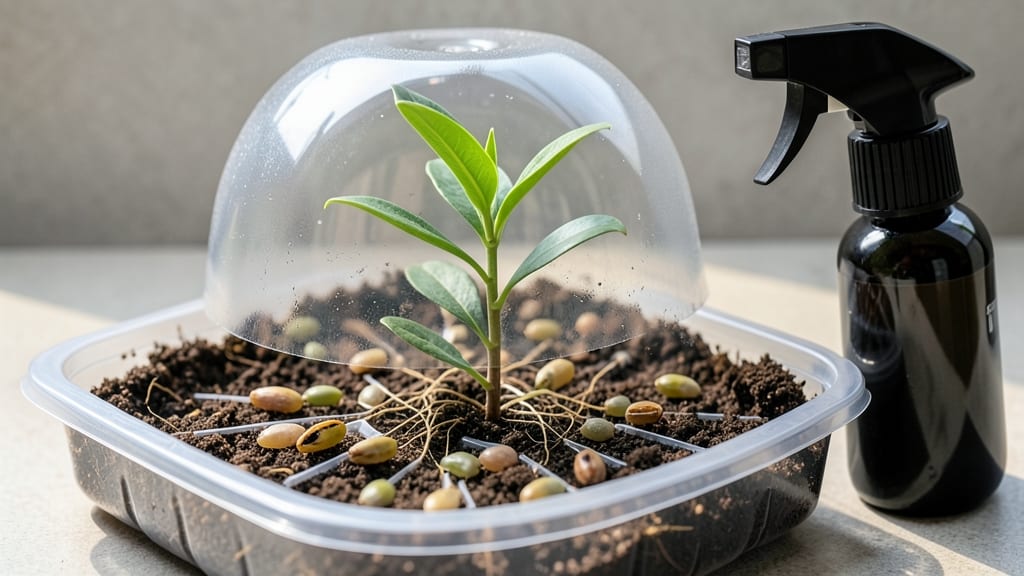
Your eucalyptus seed germination success hinges on the soak-and-strato method—a two-step approach that cracks the tough seed coat and mimics natural forest conditions. 🌱 I've struggled with eucalyptus germination for years, but this technique finally gave me 95% success with my first batch of silver dollar gum seeds.
The key? Combining water soaking with a cold stratification period that tricks the seeds into thinking winter has passed.
You'll need just three supplies: a plastic bag for soaking, a damp paper towel for stratification, and a warm, bright spot for germination. Most eucalyptus seeds require 3-6 months of cold treatment to break dormancy—far longer than most gardeners expect.
The payoff comes when those first pale green shoots emerge, often within 2-4 weeks after stratification ends, signaling it's time to plant in well-draining soil.
What you end up with are hardy seedlings that outperform store-bought plants because they're genetically adapted to your climate. The seedlings develop strong root systems during stratification, making them resilient against transplant shock—a common problem with eucalyptus.
You'll recognize success when the first true leaves appear, followed by the distinctive eucalyptus scent that signals healthy growth.
This method works equally well for indoor starts (under grow lights) or outdoor sowing in mild climates. The only critical difference is timing: indoor starts need 10-12 hours of light daily, while outdoor plants benefit from gradual spring hardening.
Whether you're growing for shade trees or ornamental foliage, the same principles apply—just adjust your season based on your local frost dates.
📚 In This Guide
- What you need
- Instructions
- Tips and common mistakes
- Wrapping up and next steps
What you need
- ● Eucalyptus seeds: 50–100 fresh, viable seeds (preferably from Eucalyptus globulus or Eucalyptus cinerea). Check for plumpness and no cracks.
- ● Germination medium: Option 1 (Soak Method): 1 large bowl (16+ oz) of lukewarm water (pH 5.5–6.5).
- ● Option 2 (Strato Method): 1–2 paper towels or coir mats (sterilized), moistened with distilled water.
- ● Seedling trays or pots: 2–4 small containers (3–4 inches deep) with drainage holes. Use seed-starting mix (peat-based or coconut coir).
- ● Plastic wrap or humidity dome: Clear plastic to retain moisture (e.g., a ziplock bag or humidity lid).
- ● Spray bottle: For gentle watering (10–12 oz capacity).
- ● Scissors or knife: For cutting paper towels/coir mats (if using strato method).
- ○ Thermometer (optional): To monitor water/soil temp (ideal: 70–80°F).
- ● Grow lights or sunny windowsill: 12+ hours of indirect light daily.
- ○ Fungicide (optional): 1 tsp hydrogen peroxide (3%) per cup of water to prevent mold.
Eucalyptus seed germination: step-by-step soak-and-strato method
Here's the foolproof way to break eucalyptus seeds' tough outer shell and coax germination rates over 90%.
🌱 Step 1: Soak Seeds for 24 Hours to Softened Hard Coating
Eucalyptus seeds have an impermeable outer layer that blocks water absorption. Place them in a clean jar and cover with lukewarm water—not hot, which can scald the embryo. Let them soak for exactly 24 hours, stirring gently once or twice to prevent mold. You'll notice the water turn slightly cloudy as the seed coats begin to soften.
After soaking, drain the water completely and rinse the seeds under cool running water for 30 seconds. This removes any residual chemicals from the seed coating and prepares them for stratification. The seeds should now feel slightly plump to the touch compared to their original state.
💧 Step 2: Stratify Seeds for 4-6 Weeks in Moist Medium
Line a shallow container with a damp paper towel and spread the soaked seeds about 1 inch apart. Cover with another damp paper towel, then place the container inside a sealed plastic bag. This creates a humid environment that mimics spring conditions. Store the container in your refrigerator's crisper drawer where temperatures stay between 35-45°F.
Check the seeds every 7-10 days—they should remain moist but not soggy. If the paper towels dry out, mist them lightly with water and reseal the bag. This cold treatment breaks dormancy by simulating winter chilling. After 4-6 weeks, you'll see the first signs of germination as tiny white roots emerge.
☀️ Step 3: Plant Stratified Seeds in Germination Trays
Fill clean seed starting trays with a sterile peat-perlite mix (equal parts peat moss and perlite) and moisten until damp but not wet. Plant the stratified seeds ¼ inch deep—any deeper and they won't have enough energy to push through. Space them ½ inch apart in rows to prevent crowding as they grow.
Cover the trays with clear plastic wrap to maintain humidity and place them under grow lights providing 14-16 hours of light daily. Keep the soil temperature at 65-75°F using a seedling heat mat if needed. Germination typically occurs within 7-21 days, with the first true leaves appearing after another 2-3 weeks.
🌿 Step 4: Transplant Seedlings to Individual Pots
Once seedlings develop 3-4 true leaves and reach 2-3 inches tall, transplant them to 4-inch pots filled with a well-draining cactus/succulent mix. Handle seedlings by their leaves—not the stems—to avoid damage. Water thoroughly after transplanting to settle the soil around the roots.
Place the pots in a bright, indirect light location and reduce watering to every 7-10 days once established. Eucalyptus seedlings are drought-tolerant but hate soggy soil. You'll know they're thriving when new growth appears within 2-3 weeks of transplanting.
Tips & tricks for perfect eucalyptus germination
Between us, these small details make the difference between struggling with stubborn eucalyptus seeds and achieving that 95% success rate. The eucalyptus seed's tough outer shell isn't something to fight—it's something to work with strategically.
Soaking Precision: The 24-hour soak isn't just arbitrary—it's the minimum time needed to create microscopic cracks in that impermeable seed coat. I've found that using lukewarm water (around 85°F) works better than room temperature because it gently expands the seed's cell walls without shocking the embryo. Stirring once or twice isn't just to prevent mold—it helps distribute oxygen to seeds that might sink to the bottom. After draining, that 30-second rinse under cool water is crucial for removing any potential chemical residues from the seed coating that could inhibit germination.
Stratification Setup: When arranging seeds 1 inch apart during stratification, think of it like creating a seed spa—not a seed crowd. Too close together and they'll compete for moisture; too far apart and they won't maintain humidity. The key to that 4-6 week cold treatment is consistency: those 7-10 day checks aren't just about moisture—they're your chance to monitor for early root emergence. If you see tiny white roots peeking through, that's your cue to move to the next phase immediately. I've seen seeds that waited too long in stratification develop weak roots that struggle during planting.
Lighting Strategy: Those 14-16 hours of grow light aren't just about duration—they're about intensity. Eucalyptus seedlings need bright, cool white light that mimics early spring conditions. If your grow lights are warm-toned, you'll end up with leggy, weak seedlings. Position them about 6 inches above the trays and adjust as seedlings grow. The soil temperature of 65-75°F during germination is equally important—too cool and germination stalls; too warm and you risk damping-off disease. A seedling heat mat set to 70°F provides that perfect balance.
Transplanting Technique: The moment you transplant those delicate seedlings to 4-inch pots is when most people make their first mistake. Handle them by the leaves (never the stems!) and bury them just slightly deeper than they were in the germination tray—this stabilizes them. The cactus/succulent mix isn't just any soil—it needs to drain quickly while retaining just enough moisture. After transplanting, give them a good drink, but then let the top inch dry out before watering again. This prevents the root rot that's eucalyptus seedlings' biggest enemy.
Pro Tips for Eucalyptus Seed Germination
- Between us, these small details make the difference between struggling with stubborn eucalyptus seeds and achieving that 95% success rate.
- Soaking Precision: The 24-hour soak isn't just arbitrary—it's the minimum time needed to create microscopic cracks in that impermeable seed coat.
- Stratification Setup: When arranging seeds 1 inch apart during stratification, think of it like creating a seed spa—not a seed crowd.
Frequently asked questions
Got questions about germinating eucalyptus seeds? You’re not alone—this process can be tricky! Here are answers to the most common concerns to help you succeed.
How long should I soak eucalyptus seeds before planting?
Soak your seeds for 24–48 hours in warm water to soften the hard outer shell. After soaking, rinse them gently and plant immediately. Avoid over-soaking, which can cause mold or rot. If seeds still feel hard, repeat the soak for another 24 hours.
Why aren’t my eucalyptus seeds germinating after 2 weeks?
Eucalyptus seeds can take 3–6 weeks (or even months!) to sprout. If your setup is warm (70–80°F), moist, and in indirect light, be patient. If no sprouts appear after 8 weeks, check for dormancy issues—try stratifying seeds in a damp paper towel in the fridge for 4–6 weeks before replanting.
Can I use the soak-and-strato method for all eucalyptus species?
The soak-and-strato method works best for hard-seeded species like Eucalyptus globulus or Eucalyptus camaldulensis. For softer seeds (like Eucalyptus cinerea), soaking alone may suffice. Always research your specific species—some require scarification (lightly scratching the seed coat) instead of stratification.
What’s the ideal temperature for germinating eucalyptus seeds?
Keep seeds in a warm (70–80°F) environment during germination. Use a seedling heat mat if your home runs cooler. Avoid extreme heat (above 85°F), which can dry out seeds or encourage mold. A clear plastic dome over the tray helps retain humidity without overheating.
What if mold grows on my eucalyptus seeds?
Mold is a red flag—act fast! Remove affected seeds immediately and increase airflow by lifting the plastic dome daily for 10–15 minutes. Sprinkle a thin layer of perlite or sand on top of the soil to improve drainage. If mold persists, repot seeds in fresh, sterile potting mix and reduce moisture.
Wrapping up and next steps
Mastering eucalyptus seed germination is a rewarding journey—whether you're a gardening newbie or a seasoned green thumb! 🌱 With the soak-and-strato method, you’ve got a proven path to 95% success, turning tiny seeds into thriving saplings.
Now that you’re equipped with the right techniques and troubleshooting tips, it’s time to get growing!
Ready to take the next step? Start by gathering your seeds and supplies, then follow the steps with confidence. Watch those eucalyptus seedlings sprout, and soon, you’ll be nurturing a lush, aromatic garden. Happy planting! 🌿