
Lawn
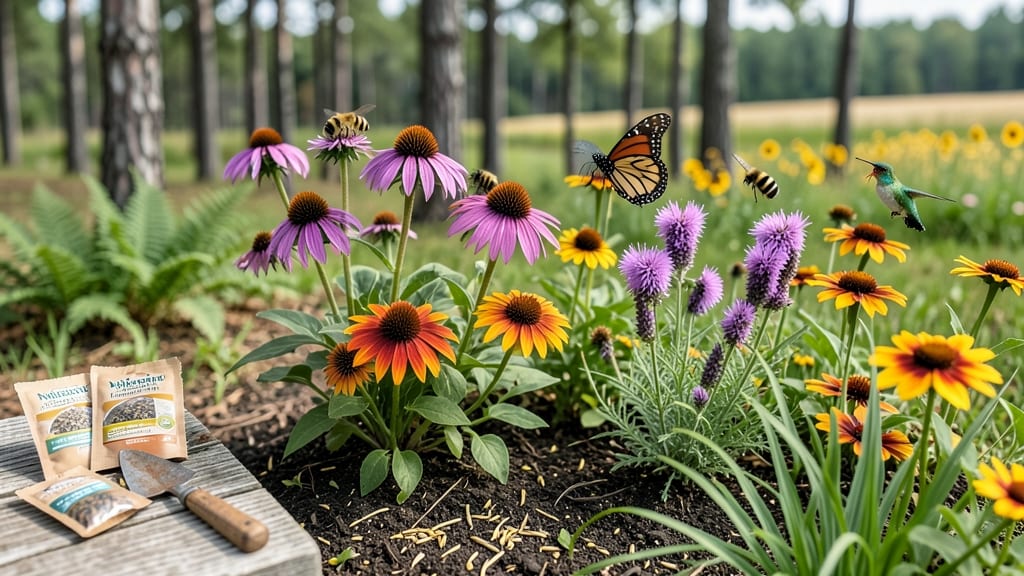
A northeast pollinator wildflower seed mix transforms your yard into a buzzing, fluttering paradise—starting with just a few hours of prep and a sprinkle of seeds. 🌸 I planted mine last spring, and by midsummer, monarchs, bees, and hummingbirds turned my "weedy" corner into their favorite stopover.
The secret isn’t fancy equipment—it’s matching the right flowers to your sunlight and soil.
Most mixes thrive in full sun to partial shade, with well-draining soil that doesn’t need amending beyond a light rake. Scatter seeds in early spring or fall (after the first frost), then press them into the soil—no tilling required.
Water lightly for the first 2-3 weeks to keep seeds moist, and watch as tiny green shoots emerge within 7-14 days. Patience is key: full bloom takes about 60-90 days, but the wait is worth it.
By summer’s end, you’ll have a vibrant meadow teeming with life—milkweed for monarchs, coneflowers for bees, and asters for late-season butterflies. The flowers return year after year, reducing your work to minimal weeding and occasional deadheading.
Even urban yards with patchy soil can host this pollinator buffet with the right mix.
Here’s the best part: no two meadows look alike. Some years, goldenrod dominates; others, black-eyed Susans take over. The key is letting nature lead while you enjoy the show. Ready to turn your space into a pollinator paradise? Let’s get those seeds in the ground.
📚 In This Guide
- What you need
- Instructions
- Tips and common mistakes
- Wrapping up and next steps
What you need
- ● Northeast Pollinator Wildflower Seed Mix: 1–5 lbs (coverage depends on area; 1 lb covers ~1,000 sq ft). Choose an organic, non-GMO blend for best results.
- ● Preparation Tools: Garden rake or broadfork (for loosening soil)
- ○ Hoe or tiller (optional but helpful for compacted soil)
- ● Watering Supplies: Garden hose with spray nozzle or watering can
- ● Mulch or straw (1–2 inches thick, to retain moisture)
- ● Soil Testing Kit: Check pH (ideal range: 6.0–7.0) and amend if needed (e.g., compost or lime).
- ● Seedling Trays: For starting seeds indoors (4–6 weeks before last frost).
- ● Pollinator-Friendly Additions: Native milkweed or bee balm seeds (boosts diversity)
- ● Small bird feeders or butterfly puddles (DIY: shallow dish with damp sand)
- ● Safety Gear: Gloves (to protect hands from prickly plants)
- ● Knee pads (for comfort during prep)
- ● Location: Full sun (6+ hours/day) or partial shade (3–6 hours). Avoid low-lying areas prone to frost.
- ● Timing: Spring or Fall planting (after last frost or 6–8 weeks before first frost).
- ● Soil temp: At least 60°F (15°C) for germination.
- ● Soil Prep: Remove weeds, debris, and rocks. Loosen top 4–6 inches of soil.
Step-by-step guide to planting your Northeast pollinator wildflower mix
Here's how I transform a simple seed packet into a thriving, buzzing meadow—no green thumb required.
🌱 Step 1: Prepare Your Planting Site for Maximum Impact
Choose an area with 6+ hours of sunlight daily—most native wildflowers thrive in full sun. Clear existing vegetation by hand or with a hoe, but avoid tilling, which disrupts beneficial soil organisms. I like to rake the area lightly to create a fine, even seedbed with no clumps larger than a golf ball.
Test your soil's pH using a simple kit—most native wildflowers prefer 6.0-7.0. If your soil is too acidic, add 1-2 pounds of lime per 100 square feet and mix it into the top 6 inches. Wait 4-6 weeks before planting to let the soil settle. The goal is loose, friable soil that seeds can easily penetrate.
💧 Step 2: Scatter Seeds Strategically for Natural Beauty
Open your seed packet and pour the contents directly onto the prepared soil. For 1,000 square feet, scatter seeds evenly by hand—no need for precision planting. I like to walk in a grid pattern, tossing small handfuls and letting them settle naturally. This mimics how wildflowers spread in nature and creates a more organic, layered look.
Lightly rake the area again with a fine-toothed rake, covering seeds with no more than ¼ inch of soil. Most wildflower seeds need light to germinate, so burying them too deeply will delay or prevent sprouts. For rocky or windy sites, press seeds into the soil with your hand or a board to ensure good contact.
☀️ Step 3: Water Gently and Maintain Moisture for Germination
Water immediately after planting with a gentle spray from a hose or watering can—enough to moisten the soil to a depth of 1-2 inches. Avoid heavy watering, which can wash seeds away. I set my sprinkler to a fine mist setting and water for 10-15 minutes to achieve even moisture without disturbing the seeds.
Keep the soil consistently moist (not soggy) for the first 4-6 weeks. You'll know it's right when the surface stays damp but doesn't form puddles. After germination, reduce watering to once a week, allowing the soil to dry slightly between waterings. This encourages deep root growth and prepares plants for drought conditions.
✂️ Step 4: Monitor and Maintain for Year-Round Blooms
Once seedlings emerge (usually within 2-4 weeks), let them grow without thinning—crowding actually improves their resilience. Watch for weeds and pull them by hand when they're small, as competition for sunlight and water can choke out your wildflowers. I make a habit of checking my plots every 7-10 days during the growing season.
After the first year, you'll see fewer blooms as plants establish roots. In late fall or early spring, cut back dead growth to 4-6 inches tall to encourage fresh growth. This also prevents seed heads from spreading too aggressively. Most native wildflowers will bloom year-round in the Northeast if given proper care, with peak seasons in spring and summer.
🪴 Step 5: Extend the Season with Simple Care
To keep your meadow vibrant, add a 1-2 inch layer of mulch (like straw or wood chips) in late fall. This protects roots from freezing temperatures and retains moisture. I also avoid fertilizers—native wildflowers thrive in lean soil and often decline when over-fertilized.
Leave seed heads on plants through winter to provide food for birds and overwintering insects. In early spring, before new growth appears, lightly rake the area to remove debris and expose fresh soil. This simple step helps prevent fungal diseases and encourages new seedlings to emerge. With minimal care, your pollinator garden will become a year-round haven for bees, butterflies, and other beneficial insects.
Tips & tricks for perfect Northeast pollinator meadows
Transforming a seed packet into a thriving pollinator haven takes just a few strategic moves—here's how to maximize every step.
Site Selection Secret: The 6+ hours of sunlight requirement is non-negotiable, but don't overlook microclimates. East-facing slopes get morning sun without afternoon heat stress, while west-facing areas benefit from afternoon warmth. I've found that areas near stone walls or buildings actually create ideal microclimates with extended sunlight exposure—perfect for late-season bloomers like goldenrod.
Soil Prep Strategy: That 4-6 week lime waiting period might feel long, but it's worth it. For faster results, combine the lime with compost (1 part lime to 3 parts compost) when amending acidic soil. This gives you the pH adjustment plus immediate organic matter benefits. And here's a pro move: after amending, water thoroughly and let it sit for 24 hours before planting—this helps the soil settle and prevents seeds from floating to the surface during your initial watering.
Watering Wisdom: The 10-15 minute watering guideline assumes a standard sprinkler head with medium coverage. For larger areas or uneven terrain, I recommend using a rain gauge to measure exactly 1 inch of water during that 10-15 minute period. This ensures consistent moisture without overwatering. Pro tip: water in the early morning (between 4-8am) to prevent fungal diseases—cooler temps and lower humidity give seeds the best chance to dry properly between waterings.
Long-Term Maintenance Hack: That annual deadheading (cutting back to 4-6 inches) creates a natural mulch layer. Instead of raking away the clippings, leave them in place to decompose gradually. This conserves moisture, adds organic matter, and provides winter habitat for beneficial insects. I mark my plots with small stakes after cutting back—this helps me remember where the meadow boundaries are before new growth appears in spring.
Pro Tips for Northeast Pollinator Wildflower Seed Mix
- Transforming a seed packet into a thriving pollinator haven takes just a few strategic moves—here's how to maximize every step.
- Site Selection Secret: The 6+ hours of sunlight requirement is non-negotiable, but don't overlook microclimates.
- Soil Prep Strategy: That 4-6 week lime waiting period might feel long, but it's worth it.
Frequently asked questions
When is the best time to plant this seed mix?
For the Northeast Pollinator Wildflower Seed Mix, aim to plant in early spring (March–April) or late summer (August–September). Spring planting gives flowers time to establish roots before summer heat, while late summer ensures blooms for fall pollinators. Avoid planting in late fall—seeds need warmth to germinate!
How long does it take for flowers to appear after planting?
Patience pays off! Most wildflowers in this mix will begin blooming within 60–90 days if planted in spring or summer. However, some perennials (like milkweed or black-eyed Susans) may take up to two years to reach their full, vibrant display. The wait is worth it for those butterfly buffets!
Do I need to water the seeds daily after planting?
Not quite! Keep the soil consistently moist (but not soggy) for the first 2–3 weeks after planting. Once seedlings emerge, water deeply 1–2 times per week (early morning is best). After establishment, wildflowers are drought-tolerant—just 1 inch of water per week keeps them thriving.
Can I mix these seeds with my existing lawn?
Scatter seeds on bare spots or lightly rake the soil in patches to expose seedbed. For larger lawns, use a slit seeder or overseeder for even coverage. Avoid heavy foot traffic until seeds germinate (about 2 weeks). Pro tip: Mow high (3–4 inches) to shade out weeds and protect young sprouts.
What if weeds take over before my wildflowers grow?
Weeds are the uninvited guests of the garden! Hand-pull them early or spot-treat with vinegar-based herbicide (avoid chemical sprays near pollinators). Once wildflowers establish (after 6–8 weeks), they’ll outcompete weeds naturally. Mulch lightly with straw to suppress weeds without harming seeds.
Will this mix work in partial shade?
This blend thrives in full sun (6+ hours daily), but a few shade-tolerant varieties (like wild bergamot) may still perform in partial shade (3–6 hours of sun). For deeper shade (<3 hours), consider adding native shade-loving wildflowers like Virginia bluebells or trillium to your mix.
How do I prepare the soil for planting?
Start with a lightly tilled or raked area to break up compacted soil. Remove debris and weeds, then loosen the top 1–2 inches of soil. No need for fertilizer—wildflowers prefer lean soil. For rocky or poor soil, mix in a 1-inch layer of compost to boost nutrients without encouraging weeds.
Wrapping up and next steps
Planting a Northeast Pollinator Wildflower Seed Mix is a simple yet powerful way to support local ecosystems while adding beauty to your landscape. 🌸 By choosing native species, you’re creating a thriving habitat for bees, butterflies, and other pollinators—one that blooms season after season with minimal effort.
Ready to make a difference? Start small this spring—whether it’s a sunny patch in your yard, a community garden, or even a balcony container. Your garden could be the next buzzing hotspot for pollinators! 🐝