
Planting
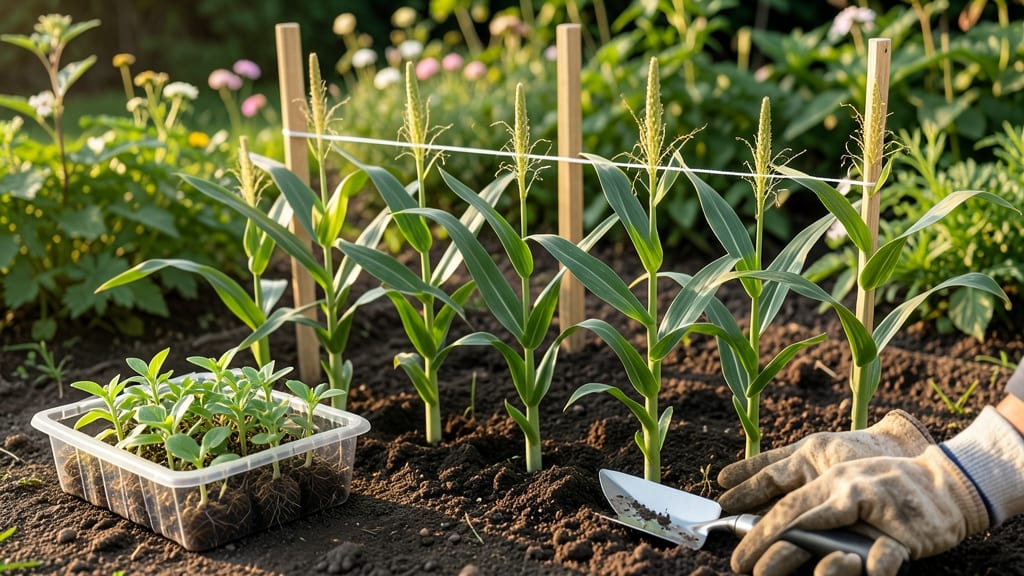
Sweet corn seed spacing isn't just about numbers—it's the difference between a bountiful harvest and a patchy disappointment. 🌽 I learned this the hard way after planting too close one spring and ending up with tiny ears and lots of broken stalks.
The right spacing ensures strong stalks, good pollination, and ears big enough to actually use. Most gardeners plant corn in 36-inch rows with seeds spaced 4-6 inches apart—but this varies by variety. Dwarf varieties can handle tighter spacing, while tall varieties need room to avoid shading.
The key is matching your spacing to the plant's mature size, not just following a generic rule. When done right, you'll see stalks reaching 6-8 feet tall with ears forming high up where they get full sun.
The plants will stand strong in the breeze, and you'll pull ears that are plump, juicy, and ready for the grill. Proper spacing also makes harvesting easier—no more wrestling with tangled stalks. Here's the secret: consistency is everything.
Measure your rows with a tape measure, use a seed spacing tool, or even stick toothpicks in the ground as markers. A little extra effort now means double the ears at harvest time—and fewer broken stalks to deal with.
📚 In This Guide
- What you need
- Instructions
- Tips and common mistakes
- Wrapping up and next steps
What you need
- ● Sweet corn seeds: Choose heirloom or hybrid varieties (e.g., 'Silver Queen,' 'Peaches & Cream,' or 'Ambrosia'). Buy 1–2 lbs per 100 ft²—check seed packets for exact spacing recommendations.
- ● Garden soil: Well-draining, fertile soil with a pH of 6.0–7.0. Amend with compost if needed (aim for 2–3 inches mixed into the top 6 inches of soil).
- ● Organic fertilizer: A balanced 10-10-10 or 5-5-5 (NPK ratio) to boost early growth. 1–2 cups per 10 ft of row is ideal.
- ● Mulch: Straw or grass clippings (2–3 inches thick) to retain moisture and suppress weeds.
- ● Garden trowel or transplanting knife (for precise planting holes).
- ● Measuring tape or string with stakes (to mark rows and spacing—12–15 inches apart for hills, 36–48 inches between rows).
- ● Hand cultivator or hoe (for weeding and loosening soil).
- ● Watering can or hose with a gentle spray nozzle (keep soil consistently moist but not waterlogged).
- ● Gloves (to protect your hands from dirt and thorns).
- ● Seedling trays (if starting indoors 4–6 weeks before last frost).
- ● Plant labels (to track varieties and spacing).
- ● Row covers or shade cloth (to protect young seedlings from pests or heat).
- ● Corn trellis or stakes (if growing tall varieties like ‘Bodyguard’).
Step-by-step sweet corn planting for optimal yields
Here's the planting math that's helped me grow bushels of sweet corn year after year.
🌱 Step 1: Plan Your Rows Based on Variety
Sweet corn varieties fall into two main categories: standard (like Silver Queen) and super sweet (like Honey & Pearl). Standard types need 36-40 inches between plants in rows spaced 30-36 inches apart. Super sweet varieties can handle slightly tighter spacing—30-34 inches between plants with 28-32 inches between rows. I always check the seed packet for exact recommendations, but these ranges work for 90% of varieties.
For a 4-row planting (which yields enough for a family of four), I use two 20-foot rows with 32-inch spacing between plants. This gives me about 25 plants per row, or 50 total plants—plenty for fresh eating, freezing, and sharing. Draw a simple grid on paper first to visualize your layout before digging.
🌱 Step 2: Prepare the Soil and Plant in Hills
Sweet corn thrives in well-draining, fertile soil with a pH of 6.0-6.8. Work in 2-3 inches of compost or a balanced 10-10-10 fertilizer two weeks before planting. Corn loves warmth, so wait until the soil reaches 60°F at least 6 inches deep—a soil thermometer is worth its weight in gold here.
Instead of planting in straight lines, I create hills—small mounds about 6 inches high and 12 inches in diameter. Space hills 30-36 inches apart (depending on your variety). Plant 2-3 seeds per hill, pressing them 1-1.5 inches deep into the soil. The extra seeds act as insurance—if one fails, you still get a stand. Tap the soil gently to settle it around the seeds without burying them too deep.
💧 Step 3: Thin Seedlings for Maximum Airflow
Germination usually takes 7-14 days, depending on soil temperature. Once sprouts appear, watch for the first true leaves (the second set of leaves, after the initial seed leaves). This is your cue to thin—keep only the strongest seedling per hill. Use small scissors to snip the weaker stems at soil level, or gently pull them by the base to avoid disturbing the roots of the remaining plant.
Thinning might seem cruel, but crowded corn plants compete for nutrients and sunlight, leading to smaller ears and poor pollination. After thinning, give the soil a light watering to help the remaining seedlings establish roots. You’ll notice the surviving plants perk up within a day or two—that’s your signal they’re thriving.
☀️ Step 4: Maintain Consistent Moisture and Fertility
Sweet corn needs 1-1.5 inches of water per week, especially during tasseling (when the pollen-producing stalks emerge). I water deeply 2-3 times per week rather than daily shallow watering—this encourages deep root growth. The soil should feel moist 2-3 inches down but not soggy. A simple finger test works best: stick your finger in the soil near the base of the plant. If it feels dry, it’s time to water.
Side-dress with nitrogen-rich fertilizer (like blood meal) when plants reach 12 inches tall. Scatter a handful of fertilizer 3 inches away from the base and water it in. This mid-season boost prevents yellowing leaves and ensures strong stalks. Avoid over-fertilizing—too much nitrogen leads to lush foliage but fewer ears.
⏰ Step 5: Watch for Pollination and Harvest Readiness
Pollination happens when the tassels (the feathery tops) release pollen onto the silks (the fine strands emerging from the ear). This usually occurs 60-70 days after planting, depending on your variety. In the morning, give the plants a gentle shake to help pollen spread. You’ll know pollination worked when the silks turn brown and crispy within a day or two.
Harvest when the silks turn brown and the kernels are plump and milky when pierced with a fingernail. For the best flavor, pick in the early morning when sugars are highest. Twist ears gently to avoid damaging the stalk. If you miss the window, ears become starchy and tough within 2-3 days. I always plant a second crop 2-3 weeks later to extend the harvest season—this way, I get fresh corn for 6-8 weeks straight.
Tips & tricks for perfect sweet corn planting
These planting secrets will help you get the most out of your sweet corn patch every season.
Spacing is Everything: When planning your 4-row layout with 32-inch spacing between plants, remember that this spacing accounts for both plant growth and airflow. Too tight, and you'll end up with smaller ears and poor pollination. I've found that using a simple tape measure to mark every 32 inches along your rows saves time and ensures consistency. For super sweet varieties, you can tighten to 30 inches, but never less—those plants need room to breathe.
Soil Temperature Matters: The 60°F soil temperature requirement isn't just arbitrary—it's when corn seeds finally get the warmth they need to germinate properly. I've learned this the hard way after planting too early in cool weather. Use a soil thermometer to check depth, and if your soil is cooler than 60°F, wait a few more days. The extra patience pays off with faster, more uniform germination.
Thinning Technique: That first true leaves stage is your golden opportunity to thin properly. I recommend using small scissors rather than pulling seedlings by hand—it's cleaner and prevents disturbing the roots of your remaining plants. After thinning, you'll notice the surviving plants perk up within 24 hours. This is your confirmation that you've done the right thing—they're now ready to focus all their energy on growing strong stalks and ears.
Pollination Help: The gentle shake you give your plants in the morning during tasseling might seem insignificant, but it makes a real difference. I've seen pollination rates improve dramatically when I take 30 seconds to give each plant a little shake. This helps the pollen reach more silks, leading to better ear development. Watch for those silks turning brown and crispy—it's your cue that pollination worked!
Pro Tips for Sweet Corn Seed Spacing
- These planting secrets will help you get the most out of your sweet corn patch every season.
- Spacing is Everything: When planning your 4-row layout with 32-inch spacing between plants, remember that this spacing accounts for both plant growth and airflow.
- Soil Temperature Matters: The 60°F soil temperature requirement isn't just arbitrary—it's when corn seeds finally get the warmth they need to germinate properly.
Frequently asked questions
Got questions about sweet corn seed spacing?
You’re not alone—proper spacing is key to a bountiful harvest! Here are answers to the most common queries from gardeners just like you.
What’s the ideal spacing for sweet corn seeds?
For most varieties, plant seeds 1 inch deep and 4–6 inches apart in rows spaced 24–36 inches apart. Taller varieties (like 7+ feet) need wider rows (36 inches) to prevent shading. Check your seed packet for variety-specific recommendations!
When is the best time to plant sweet corn seeds?
Sweet corn thrives in warm soil—aim for 2–3 weeks after the last frost when soil temps hit 60°F+. Early planting? Use black plastic mulch to warm the soil faster. If your growing season is short, opt for early-maturing varieties (50–60 days).
Can I replant if my first attempt fails?
Yes! If seedlings don’t emerge in 7–10 days, they likely rotted. Replant in the same spot with fresh seeds—just thin to the correct spacing. Avoid overcrowding, as it stresses plants and attracts pests. For a second planting, choose a succession variety with a shorter maturity time.
What if my garden space is limited?
Try hill planting: Drop 4–5 seeds in a 6-inch circle, then thin to 2–3 plants per hill. Space hills 18–24 inches apart in all directions. This saves space while still allowing good airflow and pollination. Bonus: Hills make weeding easier!
Why are my corn plants leaning or falling over?
Overcrowding or poor spacing often causes this. If plants are too close, they compete for nutrients and light, leading to weak stalks. Stake tall varieties or use trellises for support. Also, ensure rows aren’t planted too tightly—36-inch spacing is ideal for most types.
Pro Tip:
For even pollination (critical for sweet corn!), plant in blocks (e.g., 4x4 feet) rather than single rows. This ensures wind or insects can easily transfer pollen between plants.
Wrapping up and next steps
Perfecting your sweet corn seed spacing is the secret sauce to a bountiful harvest! 🌽 By following proven spacing guidelines—whether for single, twin, or triple rows—you’re setting yourself up for healthier plants, better pollination, and those sweet, juicy ears you crave. Remember: consistency is key, and a little planning now saves headaches later.
Ready to put your newfound knowledge into action? Grab your seeds, mark that grid, and get planting! Next up: track your progress with a simple harvest journal or app to tweak spacing for future seasons. Happy gardening—your taste buds will thank you! 🌱✨