
Propagation
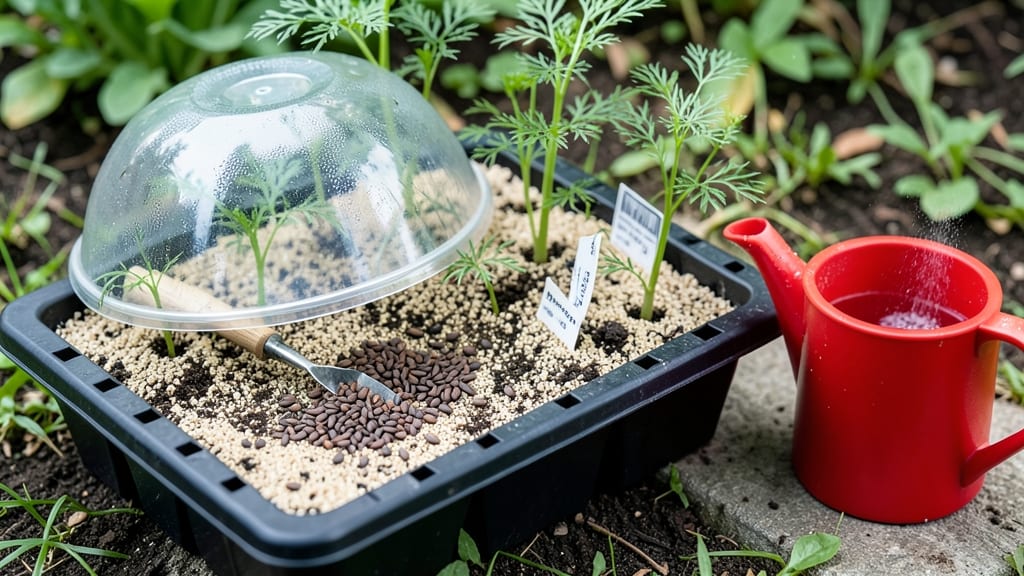
Starting carrots in seed trays cuts germination time from weeks to days—no more waiting for slow, uneven sprouts. 🌱 The secret lies in the right soil mix, shallow planting, and consistent moisture, which I perfected after my first batch took three weeks to sprout (and half of them bolted before I could transplant).
You’ll need a shallow seed tray (4-6 inches deep), fine seed-starting mix, and a spray bottle for watering—no fancy equipment required. The key is keeping the soil damp but not soggy; carrots need steady moisture to break through their hard shells.
Plant seeds just ¼-inch deep, spacing them ½-inch apart in rows, then cover lightly with more soil.
Within 7-10 days, you’ll see those first bright green shoots pushing through, and they’ll be ready to transplant in 4-6 weeks when they’ve got 2-3 true leaves. The payoff? Straight, uniform seedlings that outpace store-bought starts by weeks, with fewer forks or stunted roots.
Common mistakes to avoid: overwatering (which causes rot), planting too deep (seeds won’t sprout), and skipping the hardening-off process (seedlings get shocked when moved outside). Once you’ve got the rhythm down, you’ll never buy carrot starts again.
📚 In This Guide
- What you need
- Instructions
- Tips and common mistakes
- Wrapping up and next steps
What you need
- ● Seed trays: 1-2 shallow trays (10-12 inches long, 6-8 inches wide) with drainage holes. Plastic or biodegradable options work great!
- ● Seed-starting mix: 2-3 quarts of high-quality, sterile seed-starting mix (avoid garden soil—it’s too dense for carrots!). Look for labels like "seedling mix" or "organic potting soil."
- ● Carrot seeds: ½ teaspoon of fine carrot seeds (they’re tiny—measure carefully!). Choose heirloom or hybrid varieties like 'Nantes' or 'Danvers' for best results.
- ● Watering can or spray bottle: With a fine mist nozzle to avoid disturbing seeds.
- ○ Clear plastic dome or plastic wrap: To create a mini greenhouse effect (optional but helpful for humidity).
- ● Grow lights or sunny windowsill: Carrots need 12-16 hours of light daily. LED grow lights are ideal if natural light is limited.
- ● Small hand trowel or spoon: For gently pressing seeds into the soil.
- ● Labels and markers: To track planting dates and varieties (trust us, you’ll forget!).
- ● Heating mat (70-75°F) – Speeds up germination (especially in cool climates).
- ● Fertilizer stick or diluted liquid fertilizer – For a nutrient boost after sprouts emerge.
- ● Fine mesh or paper towels – Helps cover seeds evenly if you’re nervous about depth.
- ● Seedling heat mat – Keeps trays warm for faster germination.
Step-by-step instructions for starting carrots in seed trays
Here's how I get fast, uniform germination—no more patchy carrot rows or leggy seedlings.
🌱 Step 1: Prepare the Seed Tray and Soil Mix
Use a clean, shallow seed tray with drainage holes—carrot seeds need excellent airflow to prevent rot. I fill it with a light, sandy loam mix (60% potting soil, 30% perlite, 10% compost) because carrots hate dense soil that causes forking. Moisten the mix until it's damp but not soggy—think of a wrung-out sponge.
Smooth the surface with your fingers, breaking up any clumps. Press down gently so the soil is firm but not packed. The goal is to create a fine, even texture that won't encourage seeds to sink too deep. I run a wooden stick across the tray to make shallow furrows about ¼ inch deep—this keeps seeds in place without burying them too much.
💧 Step 2: Sow Seeds Thinly for Even Germination
Carrot seeds are tiny and slow to germinate, so I scatter them sparingly—about 1 teaspoon per square foot—directly into the furrows. Tap the tray gently to settle them into the soil, then cover no deeper than ⅛ inch with a fine sift of the same mix. Too deep, and they'll struggle to break through.
Mist the surface with a spray bottle until the soil looks uniformly damp but not wet. Place the tray in a warm, dark spot (around 70°F) for germination. I use a seedling heat mat under the tray—this ensures consistent warmth without overwatering. Germination takes 14-21 days, so patience is key.
☀️ Step 3: Provide Light and Thin Seedlings
Once sprouts appear, move the tray to bright, indirect light (like a north-facing window) for 10-12 hours daily. Avoid direct sun—young seedlings will scorch. I use a grow light on a timer if natural light is weak, keeping it 4 inches above the tray to prevent legginess.
When seedlings reach 1 inch tall, thin them to 1 inch apart using scissors—pulling risks disturbing roots. Keep the strongest, straightest sprouts. Water gently from the bottom to avoid washing away soil. This step is critical: crowded seedlings compete for nutrients, leading to stunted, misshapen carrots later.
🪴 Step 4: Transplant to Individual Pots
After 4-6 weeks, when seedlings have 3-4 true leaves, transplant them to 3-inch pots filled with the same light mix. Handle them carefully—their taproots are delicate. Bury them to the same depth they were in the tray to avoid stress. Place pots in a shaded outdoor spot for a week to harden off.
Water deeply but infrequently—carrots need consistent moisture but hate soggy soil. After two weeks, they're ready for the garden or larger containers. I always space them 2-3 inches apart in the final location to prevent forking. The key is patience: uniform seedlings now mean straight, sweet carrots later.
Tips & tricks for fast carrot seedling success
These little tricks will help you avoid the most common pitfalls when growing carrots from seed—no more patchy trays or leggy seedlings!
Soil Texture is Everything: The 60% potting soil, 30% perlite, 10% compost mix isn't just a suggestion—it's non-negotiable for carrots. Too much soil compacts easily, causing forking. After smoothing your furrows in Step 1, press them down with a spoon to create a firm but crumbly surface. This prevents seeds from sinking too deep when you water. Think "firm but fluffy"—like a well-aerated cake batter.
Germination Warmth Secret: That 70°F recommendation isn't arbitrary—carrot seeds germinate best within a very narrow temperature range. If your home runs cooler, place the tray on a seedling heat mat set to 70°F. Too cold (below 60°F) and germination slows dramatically; too hot (above 80°F) and seeds may rot. I've seen germination times stretch from 14 days to over 30 days when temps fluctuated!
Light Transition Strategy: When moving seedlings to light in Step 3, do it gradually over 3-4 days. Start with just 2 hours of morning light, then increase daily. This prevents the "shock" that causes leggy seedlings. After the full 10-12 hours, keep your grow light 4 inches away—closer distances create heat stress, while farther distances lead to weak stems. I use a ruler to measure this distance every time.
Thinning Technique: The 1-inch spacing after thinning isn't about the measurement—it's about the visual cue. When you see seedlings with their first true leaves touching, it's time to thin. Use sharp scissors to snip at soil level rather than pulling, which disturbs neighboring roots. The discarded seedlings make excellent compost—just chop them finely first to prevent mold.
Pro Tips for Can You Start Carrots In Seed Trays
- These little tricks will help you avoid the most common pitfalls when growing carrots from seed—no more patchy trays or leggy seedlings!
- Soil Texture is Everything: The 60% potting soil, 30% perlite, 10% compost mix isn't just a suggestion—it's non-negotiable for carrots.
- Germination Warmth Secret: That 70°F recommendation isn't arbitrary—carrot seeds germinate best within a very narrow temperature range.
Frequently asked questions
Got questions about starting carrots in seed trays?
You’re not alone! Here are answers to the most common queries—so you can grow confidently from seed to soil.
How deep should I plant carrot seeds in seed trays?
Carrot seeds are tiny—just sprinkle them ¼ inch deep over moist soil. Lightly press them in (they need light to germinate!) and cover with a thin layer of seed-starting mix. Avoid burying them too deep, or they may struggle to push through.
When is the best time to transplant carrot seedlings?
Wait until seedlings have 2-3 true leaves (about 3-4 weeks after sowing) and are 1-2 inches tall. Transplant them 1-2 inches apart in the garden, spacing rows 12-16 inches apart. Do this after the last frost when soil is at least 50°F (10°C).
Can I reuse seed trays for carrots?
Yes! Clean trays with soapy water and disinfect with a 10% bleach solution (1 part bleach to 9 parts water) to kill pathogens. Rinse well before reuse. Avoid reusing trays if they were infected with fungus or damping-off—start fresh instead.
Why aren’t my carrot seeds germinating in trays?
Carrot seeds need consistent moisture and warmth (60-70°F / 15-21°C). Check these fixes:
- Keep soil moist (not soggy!) with a spray bottle.
- Use a heat mat if your home is chilly.
- Test seed viability—carrots can take 2-3 weeks to sprout!
- Avoid deep planting (they need light).
What’s a good alternative if I don’t have seed trays?
No trays? No problem! Try these:
- Egg cartons (poke drainage holes, plant 2-3 seeds per cup).
- Yogurt cups or plastic containers (with drainage).
- Direct sow outdoors (if your climate allows early planting).
- Biodegradable peat pots (plant directly into soil later).
Wrapping up and next steps
Starting carrots in seed trays is a game-changer for gardeners—it ensures fast, uniform germination and stronger seedlings! 🌱 With the right materials, patience, and care, you’ll be well on your way to a bountiful harvest.
Once your seedlings are ready, the next logical step is transplanting them into the garden—just make sure to harden them off first for a smooth transition.
Don’t let hesitation hold you back—grab those seed trays and get growing! Your future carrot harvest will thank you. 🥕✨