
Propagation
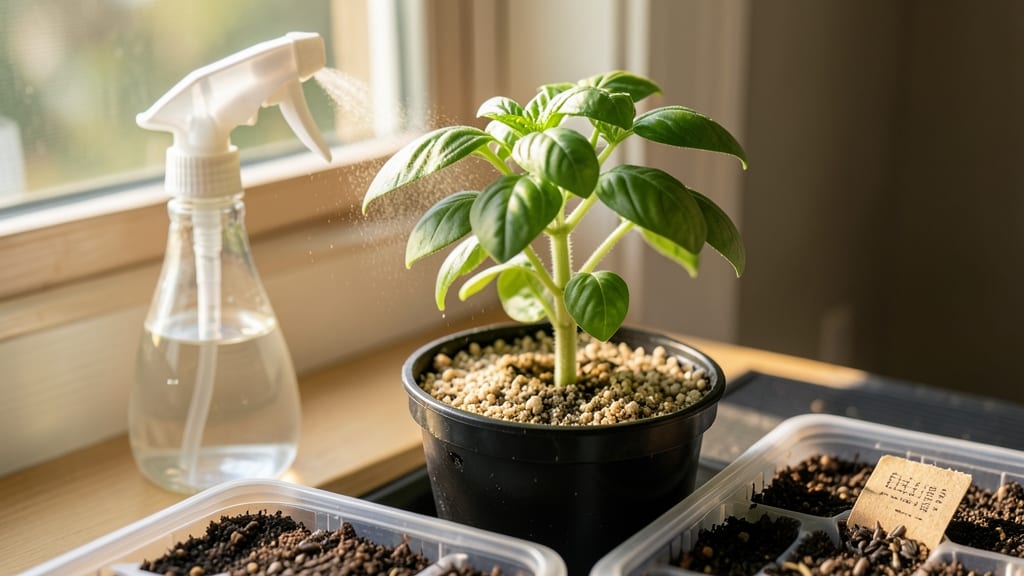
Growing basil from seed indoors means fresh, fragrant leaves year-round—no more $4 store-bought pots that wilt by Tuesday. 🌱 I’ve turned my kitchen windowsill into a basil factory using just a few simple tricks that cut germination time nearly in half.
The secret isn’t fancy equipment—it’s warmth, moisture, and patience. Start seeds in a shallow tray with dampened seed-starting mix, cover them lightly, and keep the soil at 75°F (use a heat mat if needed).
Most seeds sprout in 5-10 days, but if your kitchen stays cool, try a clear plastic bag to trap humidity. Once seedlings pop, give them bright light (a grow bulb works if natural light is weak) and water from the bottom to avoid damping off.
Within 3-4 weeks, you’ll have sturdy plants ready for their own pots—each one a potential harvest machine. This method works for any windowsill or sunny corner, and the payoff? Fresh basil anytime, even in winter. Let’s get those seeds sprouting!
📚 In This Guide
- What you need
- Instructions
- Tips and common mistakes
- Wrapping up and next steps
What you need
- ● Basil seeds: Choose sweet basil (e.g., Genovese) or purple basil—about 5-10 seeds per container.
- ● Seed-starting trays or small pots: 2-4" deep, with drainage holes (or a seedling tray + cell inserts).
- ● High-quality seed-starting mix: Lightweight, sterile, and peat-free (e.g., FoxFarm Seedling Mix). Avoid garden soil—it’s too dense!
- ● Spray bottle: For gentle watering (avoid over-saturating seeds).
- ● Grow lights or sunny windowsill: Basil needs 6-8 hours of light daily. A full-spectrum LED grow light (12-18" above plants) works best.
- ● Humidity dome or plastic wrap: To retain moisture while seeds germinate.
- ○ Misting spray bottle (optional but helpful): For maintaining humidity post-germination.
- ● Small hand trowel: For gently pressing seeds into soil.
- ● Plant labels: To track varieties (e.g., bamboo labels or toothpicks + markers).
- ○ Fertilizer (optional): A balanced liquid fertilizer (5-5-5 or 10-10-10) diluted to half-strength for seedlings.
- ○ Thermometer (optional): Basil thrives at 70-80°F (21-27°C)—helpful if your home runs cooler.
- ● Pruning scissors: For harvesting leaves without damaging the plant.
Step-by-Step instructions for growing basil from seed indoors
Here's how I get basil seedlings sprouting in just days—not weeks—using simple tricks that prevent leggy, weak plants.
🌱 Step 1: Prep Seeds and Containers for Faster Germination
Basil seeds have a tough outer coating, so I soak them in lukewarm water for 12 hours first. This softens the shell and speeds up sprouting by 3-5 days. While they soak, fill 4-inch pots with moistened seed-starting mix—press it down lightly so it's firm but not compacted. The goal is a surface that holds shape when pressed but still lets roots penetrate easily.
I always use small pots for basil because crowded roots later lead to weak stems. If you're planting multiple seeds per pot (which I recommend for higher germination rates), space them ½ inch apart. Tap the pot gently on the counter to settle the soil—this removes air pockets that could trap seeds too deep.
💧 Step 2: Plant Seeds Shallow and Keep Warm
Plant the pre-soaked seeds just ¼ inch deep—any deeper and they'll struggle to reach light. I use my finger to make a tiny hole, drop in 2-3 seeds, then cover with a dusting of soil. Basil seeds need 75-85°F soil to germinate, so I place the pots on a seedling heat mat (or inside a warm oven with the light off) until sprouts appear.
Mist the surface with water until it's damp but not soggy. A spray bottle works best—heavy watering can wash seeds deeper than intended. Cover the pots with clear plastic wrap or a humidity dome to trap warmth and moisture. Check daily for condensation; if it's heavy, remove the cover for 10 minutes to prevent mold.
☀️ Step 3: Provide Light Immediately After Sprouting
The moment you see tiny green sprouts (usually 5-7 days after planting), remove the cover and move pots under grow lights. Basil seedlings need 14-16 hours of light daily—a south-facing window alone won't cut it. Position the light 2-3 inches above the plants and raise it as they grow to maintain that distance.
Leggy seedlings are a red flag—if stems stretch toward the light with pale leaves, your light is too far away. You'll see strong growth when leaves are dark green and compact, with stems thick enough to bend slightly without snapping. Rotate pots quarter-turn daily so they grow straight, not lopsided.
🌿 Step 4: Thin and Fertilize for Bushy Growth
Once seedlings have 2-3 true leaves (not the first tiny cotyledons), thin to the strongest plant per pot. Snip the weaker stems at soil level with clean scissors—don't pull, or you'll disturb roots. The remaining plant will fill the pot faster without competition.
Feed with a balanced liquid fertilizer (like 10-10-10) diluted to half-strength every 2 weeks. Over-fertilizing now burns tender roots. Watch for purple stems—a sign of phosphorus deficiency—then adjust your feeding schedule. Basil loves rich soil but hates soggy roots, so let the top ½ inch dry between waterings.
✂️ Step 5: Prune for Lush, Productive Plants
When your basil reaches 6 inches tall, pinch off the top set of leaves. This shock encourages the plant to branch out instead of growing tall and leggy. You'll see new side shoots emerge within 7-10 days—these are your future harvest sites. Repeat this pruning every 4-6 weeks to keep the plant bushy and productive.
Harvest leaves from the bottom up, leaving the top growth intact. Basil grows back quickly, and regular pruning prevents it from flowering too soon (flowering makes leaves bitter). If you notice buds forming, snip them immediately—they signal the end of the plant's productive life.
Tips & tricks for perfect indoor basil growth
Real talk: The difference between thriving basil and sad, leggy sprouts often comes down to these small details that most gardeners miss.
Soaking Secret: Don't just drop seeds in water for 12 hours—use lukewarm water (around 85°F) and change it halfway through. Cold water slows germination, and stagnant water can introduce bacteria. I add a few drops of hydrogen peroxide to the soaking water (1 part peroxide to 10 parts water) to prevent mold—it's a gardener's secret weapon for cleaner starts.
Heat Hack: For that 75-85°F soil temperature in Step 2, I place pots on a seedling heat mat during the day and move them to a warm spot near my kitchen (like on top of the fridge) at night. If you don't have a heat mat, try placing pots inside a closed oven with the light off—it creates a perfect warm environment without using electricity.
Light Strategy: Those 14-16 hours of light don't need to be all at once. Set up a timer for your grow lights to turn on at 6am and off at 8pm—this mimics natural daylight cycles. I've also had success with a combination of grow lights (for 8 hours) and a south-facing window (for the remaining 6-8 hours), but supplementing with artificial light prevents the "reaching" that happens when plants stretch for light.
Watering Wisdom: The ½ inch dry rule between waterings in Step 4 is crucial, but don't let the soil become bone-dry either. I use my finger to check moisture—if the top ½ inch feels dry but the next ½ inch still has moisture, it's time to water. Overwatering is the #1 killer of basil seedlings, so always use pots with drainage holes and empty saucers after watering to prevent root rot.
Pro Tips for Grow Basil From Seed Indoors
- Real talk: The difference between thriving basil and sad, leggy sprouts often comes down to these small details that ...
- Soaking Secret: Don't just drop seeds in water for 12 hours—use lukewarm water (around 85°F) and change it halfway th...
- Heat Hack: For that 75-85°F soil temperature in Step 2, I place pots on a seedling heat mat during the day and move t...
Frequently asked questions
Got questions about growing basil from seed indoors? You’re not alone—here are the answers to the most common ones!
How long does it take for basil seeds to sprout indoors?
With the right conditions (warmth, moisture, and light), basil seeds typically sprout in 7–14 days. Use a heat mat (70–75°F) to speed things up—patience is key, but consistent moisture helps!
What if my basil seeds aren’t germinating?
Check these fixes:
- Temperature: Too cold? Move to a warmer spot (seeds need warmth to wake up!).
- Moisture: Keep soil damp (not soggy)—use a spray bottle if needed.
- Light: Seeds need indirect light to sprout; direct sun can dry them out.
- Fresh seeds: Old seeds (over 1 year) may fail—try new ones!
When can I transplant seedlings outdoors?
Wait until after the last frost and when night temps stay above 50°F (10°C). Harden off seedlings (acclimate to outdoor conditions) for 7–10 days by gradually increasing sun exposure. Basil hates cold—rush it, and you’ll risk shock!
Can I grow basil from seed in water instead of soil?
Yes! Place seeds in a jar of water (change daily) until roots sprout (~1 week). Once roots are 1–2 inches long, transfer to soil. This speeds up germination but requires careful monitoring—roots are delicate!
Why is my basil turning yellow or leggy?
Yellow leaves? Usually overwatering or poor drainage. Leggy stems? Your plant needs more light—move it closer to a sunny window or use a grow light. Basil thrives on 6+ hours of bright light daily.
Wrapping up and next steps
Growing basil from seed indoors is a rewarding journey that brings fresh, fragrant herbs straight to your kitchen—without the fuss of a garden! With the right setup, patience, and a little love, you’ll soon enjoy homegrown basil for pesto, teas, or salads. 🌱✨
Now that you’ve mastered the basics, why stop here? Try experimenting with different varieties (like Thai or purple basil) or even regrow scraps from your grocery store stems. Every harvest is a win—so grab those seeds and get sprouting! 🌿