
Lawn
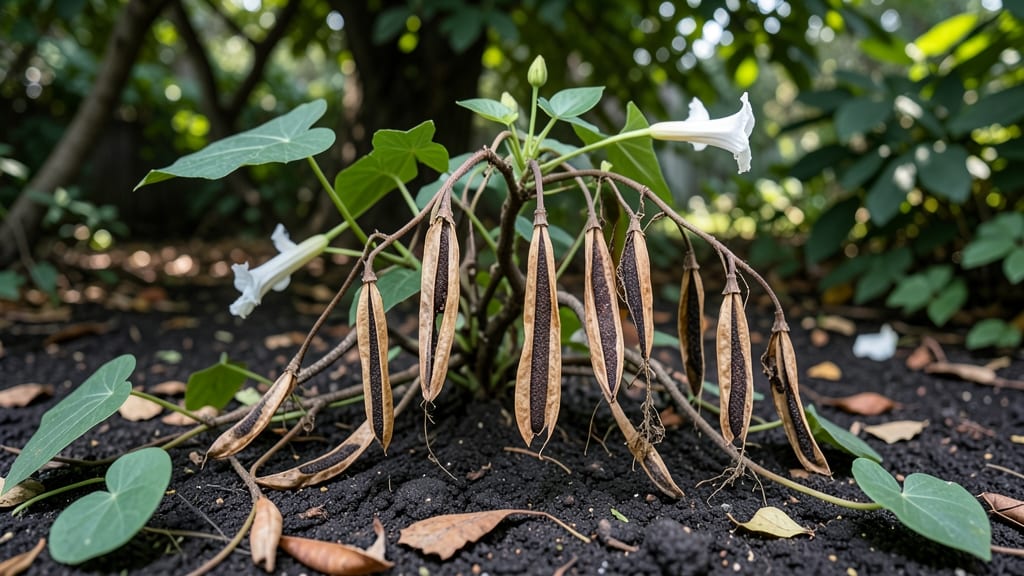
Moonflower datura seed pods are nature’s fragrant time capsules—if you know when to harvest them. 🌙 The key is patience: wait until the spiky, lantern-like pods turn brown and begin splitting open, usually 3-4 weeks after blooms fade.
But here’s the catch—never touch them barehanded. The plant’s toxins can irritate skin, so always wear gloves and wash up thoroughly after handling.
Once mature, gently twist the pods to release the black, bean-like seeds inside. Spread them in a single layer on paper towels or a mesh screen in a dry, dark place for 1-2 weeks to fully dry.
Avoid plastic bags—moisture breeds mold, and mold means lost seeds. A fan on low can speed drying without damaging the seeds, but never force it.
Store the dried seeds in an airtight container—glass jars or sealed envelopes work best—in a cool, dark spot. They’ll stay viable for 2-3 years, though germination rates drop after the first year.
When ready to plant, soak seeds overnight to soften their tough coats, then sow them in well-draining soil. Patience pays off: moonflowers bloom in 60-90 days, filling summer nights with intoxicating perfume.
Troubleshooting is simple: if seeds sprout unevenly, try stratifying them (mimicking winter) by chilling them for 4-6 weeks before planting. And remember—toxic doesn’t mean useless. Just keep kids and pets away, and enjoy the magic of growing these moonlit beauties from scratch.
📚 In This Guide
- What you need
- Instructions
- Tips and common mistakes
- Wrapping up and next steps
What you need
- ● Mature moonflower datura seed pods: Harvest 5–10 fully ripened pods (brown, dry, and slightly papery to the touch). Aim for pods that have naturally split open or are close to splitting.
- ● Brown paper bags or breathable fabric sacks: 1–2 bags (10x12 inches each) to allow airflow while preventing pests from accessing the seeds.
- ● Scissors or pruning shears: Sharp and clean for harvesting pods without damaging them.
- ● Labeling tags and a marker: To label your bags with the date and plant variety (e.g., "Datura moonflower – Harvested 2024").
- ● Drying location: A well-ventilated, dry area (like a garage, shed, or indoor space with indirect sunlight). Avoid humidity or direct sunlight, which can cause mold.
- ● Desiccant packets (silica gel): 1–2 packets to place inside the bag for extra moisture control (great for humid climates).
- ● Small mesh seed envelopes: For storing a portion of seeds separately if you want to test germination rates.
- ● Spray bottle with water: To lightly mist pods if they’re too dry during the drying process (but avoid over-wetting!).
- ● Glass jar with lid: For long-term seed storage (airtight after drying).
Step-by-step guide to harvesting, drying, and storing moonflower datura seed pods
Here's my foolproof method for preserving those striking seed pods—no guesswork, just reliable results.
🌿 Step 1: Identify and Harvest Mature Seed Pods
Moonflower datura pods turn from green to a papery brown when ready—this usually happens 8-10 weeks after flowering. Look for pods that feel dry and papery to the touch; they should rattle slightly when shaken. Harvest on a dry morning after any morning dew has evaporated to prevent moisture from sticking to the pods.
Use clean, sharp pruning shears to cut the entire pod from the stem, leaving a ½-inch stem attached. This helps prevent the pods from splitting open prematurely during drying. Place harvested pods in a single layer on a clean, dry surface—don’t stack them, as this traps moisture and encourages mold.
🌱 Step 2: Dry the Seed Pods Properly
Spread the pods in a well-ventilated area with indirect sunlight. Direct sun can scorch the pods and cause them to crack open too quickly. A mesh screen or paper towel works well for airflow. Turn the pods every 2-3 days to ensure even drying—this prevents one side from drying faster than the other, which can cause warping.
Drying typically takes 2-4 weeks, depending on humidity levels. The pods are fully dry when they feel completely hollow when tapped and the seeds inside rattle freely. If your climate is particularly humid, consider using a small fan on low setting to improve air circulation around the pods.
⏰ Step 3: Extract and Store the Seeds
Once the pods are completely dry, gently squeeze them to release the seeds. Moonflower datura seeds are large and black with a distinctive shape—discard any seeds that appear shriveled or discolored. Store the viable seeds in a small, airtight container like a glass jar or resealable plastic bag with a desiccant packet to absorb any residual moisture.
Label the container with the date and variety (if applicable). Store in a cool, dark place where temperatures stay between 40-60°F. Under these conditions, the seeds remain viable for 3-5 years. Check the container occasionally for signs of mold or pests—if you spot any, transfer the seeds to a fresh container immediately.
🪴 Step 4: Preserve the Dried Pods (Optional)
If you’d like to keep the dried pods for decorative purposes, place them in a single layer on a tray lined with parchment paper. Once completely dry, store them in a breathable container like a burlap sack or mesh bag. Keep the pods in a dry, well-ventilated area away from direct sunlight to maintain their structural integrity.
These preserved pods make stunning dried arrangements or can be used in craft projects. Just be aware that the seeds inside remain viable for years, so handle with care if you’re not ready to replant!
Tips & tricks for perfect moonflower datura seed pod preservation
Here's what nobody tells you about making sure your moonflower datura pods stay perfect through the drying process.
Harvesting Timing: The 8-10 week window after flowering is critical—don't rush it! I learned this the hard way after harvesting too early and dealing with prematurely cracked pods. Wait until the pods are completely papery brown and make that telltale rattling sound when shaken. This ensures maximum seed viability and easier drying. The morning dew warning is serious too—wet pods will mold before they dry.
Drying Environment: Indirect sunlight is non-negotiable for moonflower pods. I've seen direct sun turn them brittle and cracked in just hours. For even drying, I use a mesh screen elevated on a wooden frame—this creates perfect airflow underneath while keeping pods off damp surfaces. In humid climates, I run a small fan on low for 12 hours daily during the 2-4 week drying period. The goal is consistent airflow, not forced drying.
Storage Wisdom: That 40-60°F temperature range is your sweet spot for long-term seed viability. I store my seed containers in a basement closet with a small silica gel packet—this prevents condensation that could trigger mold. For the decorative pods, I keep them in a breathable burlap sack hung in my craft room's air circulation zone. The key is maintaining consistent dryness without creating a sealed, moisture-trapping environment.
Seed Viability Check: When testing seed quality, look for three things: uniform black color, plump shape (not shriveled), and a slight glossy sheen. I always do a float test—place seeds in water. Viable seeds sink immediately, while non-viable ones float. This simple test saves you from planting duds next season. For the decorative pods, I do a final tap test before storage—they should sound completely hollow, like a drum.
Pro Tips for Moonflower Datura Seed Pods
- Here's what nobody tells you about making sure your moonflower datura pods stay perfect through the drying process.
- Harvesting Timing: The 8-10 week window after flowering is critical—don't rush it! I learned this the hard way after ...
- Drying Environment: Indirect sunlight is non-negotiable for moonflower pods. I've seen direct sun turn them brittle a...
Frequently asked questions
Got questions about moonflower datura seed pods? You’re not alone!
Here are some of the most common queries—and their answers—to help you master saving and storing these fragrant blooms for next season.
How do I know when moonflower datura seed pods are ready to harvest?
Harvest seed pods when they turn tan or brown and feel dry to the touch (usually 4–6 weeks after flowering). Avoid harvesting if pods are still green or leaking gel—this means they’re not fully mature. A gentle squeeze should release seeds easily; if not, wait a few more days!
How long can I store moonflower datura seeds before planting?
Moonflower datura seeds remain viable for 2–3 years if stored properly in a cool, dry place (like a sealed envelope or jar). For best results, plant them within 1–2 years to ensure strong germination. Label your storage container to avoid mix-ups!
What’s the best way to dry moonflower datura seed pods before storing?
Let pods dry naturally in a well-ventilated, shaded area (like a paper bag with holes) for 1–2 weeks. Avoid direct sunlight or heat, which can crack pods prematurely. Once completely dry, crack them open to release seeds—wear gloves, as the plant contains mild toxins!
Can I grow moonflower datura from store-bought seeds, or do I need to harvest my own?
You can buy moonflower datura seeds, but harvesting your own ensures localized, hardy plants adapted to your climate. Store-bought seeds may take longer to germinate or produce weaker blooms. If buying, choose reputable seed suppliers for the best results!
Are moonflower datura seed pods toxic to pets or kids?
Yes!
All parts of the moonflower datura plant—including seed pods—contain tropane alkaloids, which are toxic if ingested. Keep pods out of reach of children and pets. Wear gloves when handling, and wash hands thoroughly afterward. When in doubt, store pods in a locked cabinet.
Wrapping up and next steps
Harvesting and storing moonflower datura seed pods is a rewarding way to ensure next year’s garden blooms with those enchanting, fragrant flowers. By following the right steps—drying, extracting, and storing seeds properly—you’ll be ready to plant with confidence. Don’t let this simple process intimidate you; every gardener starts somewhere!
Now that you’re equipped with the know-how, grab those seed pods and get preserving—your future moonflower garden will thank you! 🌙✨ Ready to plant? Check out our next guide on sowing datura seeds for best results.