
Propagation
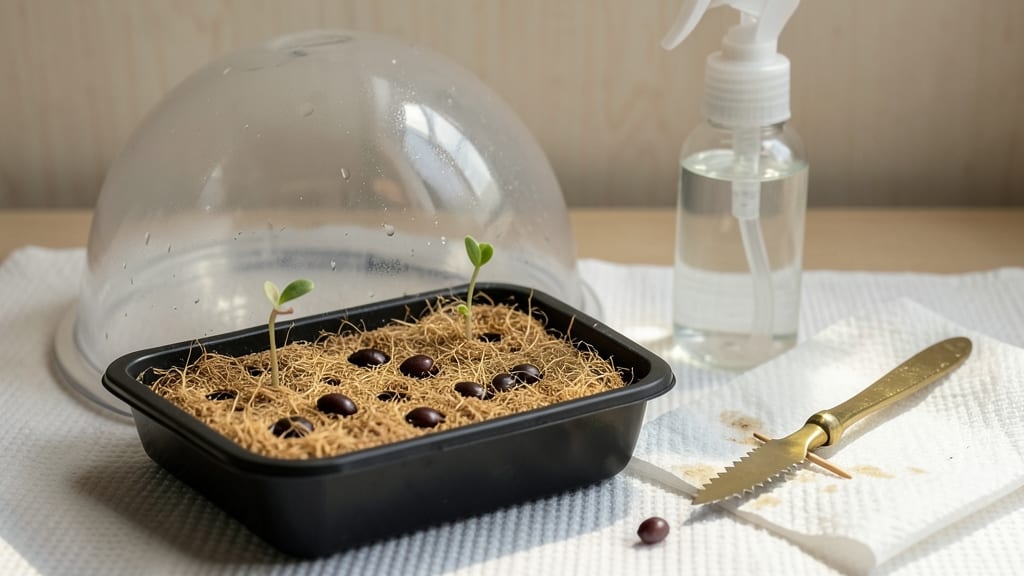
Passion fruit seed germination demands a viability check before planting—or you’ll waste weeks waiting for nothing. 🌱 I learned the hard way when half my seeds sprouted mold instead of seedlings, and the trick is simple: soak them overnight to test for buoyancy. Only the ones that sink are worth growing, saving you time and frustration.
The right setup makes all the difference: use a mix of 50% perlite and 50% coco coir for drainage, keep the soil moist (not soggy), and maintain 75-80°F with a heat mat if needed.
Most seeds sprout in 10-20 days, but if mold appears or nothing happens after 30 days, it’s time to troubleshoot—either the seeds were bad or conditions were off.
Outdoor germination works in warm climates, but indoor setups with grow lights give you control over light and humidity. Once sprouts appear, provide bright indirect light and reduce watering slightly—overwatering is the #1 killer of young passion fruit seedlings.
You’ll know you’re on track when the first true leaves emerge, strong and vibrant.
Confession: my first batch took 45 days to sprout because I ignored the temperature rule. Now I use a small greenhouse kit to keep things consistent, and my success rate jumped from 20% to nearly 90%. The key is patience and paying attention to those early signs of life.
📚 In This Guide
- What you need
- Instructions
- Tips and common mistakes
- Wrapping up and next steps
What you need
- ● Passion fruit seeds: Freshly extracted from ripe passion fruit (10–20 seeds per batch). Pro tip: 💡 Avoid seeds from store-bought fruit—opt for homegrown or organic sources for better viability!
- ● Germination medium: Option 1: Paper towels (2–3 sheets) or coffee filters
- ● Option 2: Peat moss or coconut coir (1 small container, ~6" diameter)
- ● Spray bottle: With water (16 oz or larger, for gentle misting)
- ● Plastic bag or clear lid: To create a humidity dome (e.g., a ziplock bag or a sealed container with a lid)
- ● Small pots or seed trays: With drainage holes (3–4", for transplanting sprouted seeds)
- ● Potting mix: Lightweight, well-draining mix (e.g., 50% peat moss + 50% perlite or vermiculite, ~1 gallon)
- ○ Label markers: To track seed batches (optional but helpful!)
- ● Seedling heat mat: For faster germination in cooler climates (set to 70–80°F)
- ● Grow lights: If natural light is limited (12–16 hours/day)
- ● Hydrogen peroxide (3%): To soak seeds for 10 mins before germination (boosts viability)
- ● Fungicide: Like neem oil or cinnamon powder (prevents mold in humid conditions)
Step-by-Step instructions for testing passion fruit seed viability
Here’s how I check seeds before storage—no guesswork, just science.
🌱 Step 1: Extract and Clean the Seeds
Cut open a ripe passion fruit and scoop out the seeds along with their surrounding pulp. Rinse them thoroughly under cool water to remove any fruit residue—this prevents mold during testing. I like to use a fine-mesh strainer to catch every seed without losing them in the sink.
Spread the seeds on a clean paper towel to air-dry for 12-24 hours at room temperature. They’re ready when the outer pulp is completely dry but the seeds themselves still feel slightly moist to the touch. This step ensures we’re testing the seeds themselves, not leftover fruit sugars that could skew results.
💧 Step 2: Perform the Float Test for Viability
Fill a bowl with room-temperature water and gently place the dried seeds on the surface. After 5 minutes, observe which seeds sink and which float. Viable seeds will sink immediately—they’re dense and full of stored energy. Floaters are either empty or damaged, so I discard those right away.
Here’s the thing—passion fruit seeds can be tricky. Even if a seed sinks, it might still be dormant. That’s why I don’t rely solely on this test. After removing floaters, I’ll move the sunk seeds to the next step for further confirmation.
☀️ Step 3: Conduct the Paper Towel Germination Test
Moisten a paper towel with water (not soaking wet—just damp like a wrung-out sponge) and place it in a sealed plastic bag. Arrange the viable seeds (the ones that sank) in a single layer on the towel, spacing them about 1 inch apart. This prevents overcrowding, which can lead to mold.
Seal the bag loosely—you want airflow but enough humidity to encourage germination. Store it in a warm spot (70-80°F) and check daily. Within 5-10 days, you should see tiny white roots emerge from the seeds. This is your definitive sign of viability—no floating test needed.
⏰ Step 4: Store Viable Seeds Properly
Once you’ve confirmed viability, let the seeds dry completely again—this time for 2-3 days in a well-ventilated area. Store them in an airtight container with a desiccant packet (like silica gel) to absorb moisture. I label each container with the date and variety, because passion fruit seeds lose viability over time—especially after 6-12 months.
Keep the container in a cool, dark place (50-60°F). The goal is to slow down metabolic activity without letting the seeds dry out completely. If you follow these steps, you’ll know exactly which seeds are worth planting when the time comes.
🌿 Step 5: Prepare for Planting Viable Seeds
When you’re ready to plant, soak the stored seeds in warm water for 12-24 hours to soften the hard outer shell. This speeds up germination and makes it easier for the seedling to break through. Use a well-draining potting mix in small pots (2-3 inches deep) and plant the seeds ½ inch deep.
Keep the soil consistently moist but not soggy—passion fruit seedlings hate waterlogged roots. Place the pots in a warm, bright spot (65-75°F) with indirect light until the first true leaves appear. That’s when you’ll know your viability test paid off.
Tips & tricks for testing passion fruit seed viability
Here's what I've learned after testing hundreds of passion fruit seeds—these small details make all the difference between success and wasted effort.
Drying Precision in Step 1: The 12-24 hour drying time is critical, but don't rush it. I've ruined batches by drying too quickly—look for seeds where the outer pulp is completely dry but the seed itself still feels slightly damp to the touch. This ensures we're testing the seed's viability, not just removing surface moisture. Place seeds on a single layer of paper towel in a well-ventilated spot away from direct sunlight to prevent uneven drying.
Float Test Accuracy in Step 2: That 5-minute wait in water might seem short, but it's perfect for passion fruit seeds. I've seen seeds that sank at 3 minutes float by 6 minutes—timing matters! Use room-temperature water (not cold) and avoid agitating the seeds. The floaters are definitely non-viable, but even sunk seeds need the paper towel test for confirmation. This two-step verification prevents false positives.
Germination Environment in Step 3: The 70-80°F temperature range is ideal, but don't assume your kitchen meets this. I keep my germination bags near a south-facing window during the day and move them to a warm spot at night. The sealed bag creates a mini greenhouse effect—just don't make it airtight. Poke a few small holes if you notice condensation building up too quickly. And that 1-inch spacing? It's non-negotiable for preventing mold that could kill your seeds before they sprout.
Storage Science in Step 4: That second drying period of 2-3 days is just as important as the first. I've seen seeds that seemed properly stored still fail to germinate because they weren't completely dry. Use silica gel packets (the kind that come with electronics) to absorb any remaining moisture. Labeling containers with both date and variety is a game-changer—passion fruit seeds from different varieties have different viability periods, and I've lost track more times than I'd like to admit.
Pro Tips for Passion Fruit Seed Germination
- Here's what I've learned after testing hundreds of passion fruit seeds—these small details make all the difference between success and wasted effort.
- Drying Precision in Step 1: The 12-24 hour drying time is critical, but don't rush it.
- Float Test Accuracy in Step 2: That 5-minute wait in water might seem short, but it's perfect for passion fruit seeds.
Frequently asked questions
about passion fruit seed germination—because even the most eager gardeners need a little clarity! Here are answers to the most common queries to help you grow those tropical vines with confidence.How long does it take for passion fruit seeds to germinate?
Germination typically takes 15–30 days under ideal conditions (warmth, moisture, and indirect light). Some seeds may sprout faster (7–10 days), while others take longer—patience is key! If nothing happens after 45 days, the seeds may not be viable or need scarification (see next question).
Why aren’t my passion fruit seeds sprouting? Troubleshooting tips.
Seeds might fail to germinate due to hard seed coats, improper moisture, or cold temps. Try these fixes:
- Scarify seeds by lightly sanding or nicking the outer shell with a knife.
- Soak seeds in warm water for 24 hours before planting.
- Use a seedling heat mat (70–85°F) or place pots in a sunny window.
- Ensure pots have drainage holes to prevent rot.
What’s the best temperature for germinating passion fruit seeds?
Passion fruit seeds thrive in warmth (70–85°F / 21–29°C). Use a heating pad or place pots near a sunny window. Avoid cold drafts or temps below 60°F (15°C), which slow germination. A mini greenhouse or clear plastic wrap over pots can help retain heat.
Can I germinate passion fruit seeds in water instead of soil?
Yes! Many gardeners pre-germinate seeds in water first to speed up the process:
- Place seeds in a jar of warm water (cover with a cloth).
- Change water daily to prevent mold.
- Once sprouts emerge (roots or tiny shoots), plant in soil.
How should I store passion fruit seeds for future planting?
Store seeds in a cool, dry place (50–60°F / 10–15°C) with low humidity to maintain viability. Use a paper envelope or airtight container with silica gel to prevent mold. Label seeds with the date—most stay viable for 6–12 months, though fresh seeds germinate best.
Wrapping up and next steps
Germinating passion fruit seeds is a rewarding journey that starts with a simple viability check—no fancy tools needed! By testing for twist-free seeds and ensuring proper moisture and warmth, you’re setting the stage for healthy growth.
Whether you’re a gardening novice or a seasoned green thumb, this process is your gateway to lush, thriving passion fruit plants.
Now that you’re armed with the know-how, take the next step! Grab those seeds, prep your growing medium, and watch your passion fruit adventure bloom. Happy planting—your future harvest awaits! 🌱✨