
Lawn
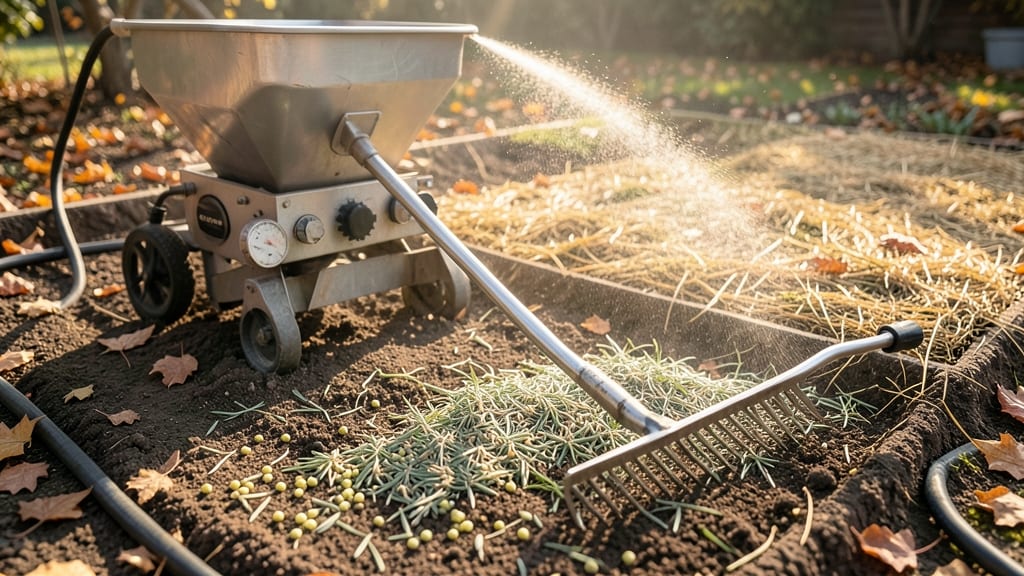
Seeding a new lawn in fall transforms your bare dirt into a thriving green carpet by spring. 🌱 The cooler air and consistent moisture give grass seeds the perfect start—no summer heat stress or drought to fight.
I’ve seeded three lawns this way, and the difference in spring emergence is night-and-day compared to spring planting. Soil prep is the secret weapon: loosen the top 4 inches, rake smooth, and top with a thin layer of compost.
Cool-season grasses like tall fescue or Kentucky bluegrass thrive when sown 4-6 weeks before your first frost—usually September to early November in most regions. Southern zones can stretch this to December, while northern areas should aim for earlier.
After seeding, keep the soil evenly moist (not soggy) for the first 2-3 weeks. A light mulch of straw helps retain moisture and shields seeds from birds. By late fall, you’ll see tender green shoots pushing through—proof the roots are establishing deep for that lush spring takeoff. The payoff?
A lawn that’s dense, weed-resistant, and ready to handle summer heat without the struggle. Perfect for first-timers, patch repairs, or complete overhauls—just don’t wait until winter sets in.
📚 In This Guide
- What you need
- Instructions
- Tips and common mistakes
- Wrapping up and next steps
What you need
- ● High-quality grass seed: Choose cool-season grasses like tall fescue, Kentucky bluegrass, or perennial ryegrass (10–15 lbs per 500 sq ft).
- ● Check the label for seed mix percentages (e.g., 80% fescue, 20% bluegrass).
- ● Lawn soil amendment: Start with compost or peat moss (1–2 inches spread evenly over the area).
- ● Starter fertilizer (high in phosphorus, e.g., 10-20-10, 1 lb per 100 sq ft).
- ● Tools for prep & seeding: Rake (bow rake for debris, garden rake for leveling).
- ● Shovel or spade (for edging or tough patches).
- ● Broadcast spreader (handheld or walk-behind, calibrated for seed type).
- ● Water hose with adjustable nozzle (fine mist setting).
- ● Soil tester kit – Check pH (ideal: 6.0–7.0 for cool-season grasses).
- ● Erosion control blanket – For sloped areas to hold seed in place.
- ● Lawn roller – Lightweight (30–50 lbs) to press seed into soil.
- ● Pre-emergent herbicide – Apply after seeding to block weeds (follow label timing!).
- ● Knee pads or gloves – Because comfort (and blisters) matter! 😉
Step-by-step instructions for seeding a new lawn in fall
Fall’s mild temps and steady rains create the perfect conditions for grass roots to establish deep before winter—here’s how to do it right.
🌱 Step 1: Prepare the Soil for Optimal Seed Contact
Start by removing all existing vegetation, debris, and rocks from the area using a sod cutter or shovel. I like to rent a sod cutter for large areas—it’s faster and leaves the soil perfectly smooth. For smaller patches, a sharp shovel works just fine. Once the ground is clear, loosen the top 6 inches of soil with a till or broadfork to break up compaction. This step is critical: compacted soil smothers seeds and prevents roots from penetrating deeply.
Next, rake the area thoroughly with a stiff-bristled rake to create a fine, crumbly texture. You want the soil to feel like a well-aerated cake mix—light enough for seeds to nestle into, but not so loose that they’ll wash away. For sandy soils, mix in 2-3 inches of topsoil or compost to improve moisture retention. In clay-heavy areas, work in 1-2 inches of coarse sand to prevent waterlogging.
💧 Step 2: Spread Seed Evenly for Uniform Germination
Divide your seed into two equal portions—this makes spreading easier and ensures even coverage. Use a broadcast spreader for large areas or a hand-held spreader for smaller sections. Walk in opposite directions (like a crosshatch pattern) to avoid overlapping streaks. For precise control, sprinkle seeds by hand, spacing them about 1/4 inch apart and 1/2 inch deep—this prevents overcrowding and encourages strong root development.
After spreading, lightly rake the area again with a drag rake to press seeds into the soil without burying them. You’ll see tiny furrows where the seeds settle—this is good. Cover them with a thin layer of peat moss or fine compost (about 1/8 inch) to protect from wind and birds while keeping light exposure optimal. Avoid heavy mulch; it can smother seeds entirely.
☀️ Step 3: Water Gently but Frequently for Consistent Moisture
Water immediately after seeding with a fine mist from a sprinkler or hose attachment—this settles seeds into the soil without displacing them. Keep the soil evenly moist (like a damp sponge) for the first 2-3 weeks, watering lightly 2-3 times daily rather than deeply once. Overhead watering is best; it mimics natural rainfall and prevents seed displacement. You’ll know you’re doing it right when the top 1/2 inch of soil stays damp but not soggy.
Once seedlings reach 2-3 inches tall (about 3-4 weeks), gradually reduce watering to 1 inch per week, splitting it into 2-3 sessions. This encourages deep root growth. Avoid walking on the lawn until the grass is mowed twice—this prevents soil compaction and seedling damage. If rain provides 1/2 inch or more, skip scheduled watering that day to avoid over-saturation.
✂️ Step 4: Maintain and Protect Until Spring Establishment
Wait until new grass reaches 3-4 inches tall before your first mow—this usually happens 6-8 weeks after seeding. Set your mower blade to 3 inches and never remove more than 1/3 of the blade height at a time. This keeps roots strong and prevents stress. I also recommend leaving grass clippings on the lawn (they decompose quickly and return nutrients to the soil).
Fall-seeded lawns need protection from foot traffic until spring, when roots are fully established. Mark the area with stakes or temporary fencing if pets or kids frequent it. Apply a light layer of compost in late fall to feed soil microbes and improve next year’s growth. By early spring, your lawn should have a dense, uniform appearance—proof that fall seeding paid off.
Tips & tricks for perfect fall lawn seeding
Fall’s cooler weather gives grass roots the ideal chance to establish deep—here’s how to maximize your success without common pitfalls.
Soil Prep is Everything: After clearing debris and loosening the top 6 inches, run your fingers through the soil—it should crumble like cake mix. If it clumps, add a bit more compost (for sandy soil) or coarse sand (for clay). This texture ensures seeds make direct contact with moisture, which is critical for germination. I’ve seen seeds fail to sprout because they were buried too deep or smothered by uneven soil.
Seed Spreading Precision: When dividing your seed into two equal portions, use a crosshatch pattern—walk north/south first, then east/west. This prevents thick streaks where seeds overlap. For hand-spreading, aim for ¼-inch spacing and ½-inch depth; any deeper and they won’t get enough light to photosynthesize. A stiff-bristled rake after spreading presses seeds just enough without burying them completely.
Watering Strategy Matters: The first 2-3 weeks are make-or-break—keep that top ½-inch of soil consistently damp like a wrung-out sponge. I use a gentle rain setting on my sprinkler to avoid displacing seeds. Morning watering (before 10 AM) prevents fungal issues, and splitting sessions into 2-3 times daily mimics natural rainfall. Overwatering here is worse than underwatering—seeds need air too.
Protect Your Investment: Once seedlings hit 2-3 inches (around 3-4 weeks), reduce watering to 1 inch per week but keep sessions short. This trains roots to grow deep. Mark the area with stakes if kids/pets roam nearby—compaction from foot traffic can stunt growth for months. A light compost top-dressing in late fall feeds soil microbes, giving you a head start next spring.
Pro Tips for Seed New Lawn In Fall
- Fall’s cooler weather gives grass roots the ideal chance to establish deep—here’s how to maximize your success without common pitfalls.
- Soil Prep is Everything: After clearing debris and loosening the top 6 inches, run your fingers through the soil—it should crumble like cake mix.
- Seed Spreading Precision: When dividing your seed into two equal portions, use a crosshatch pattern—walk north/south first, then east/west.
Frequently asked questions
Got questions about seeding your lawn in the fall?
You’re not alone! Here are answers to the most common concerns—so you can tackle your project with confidence and ease.
Why is fall the best time to seed a new lawn?
Fall offers perfect conditions for seed germination and root growth: cooler air, warm soil, and fewer weeds. Early fall (late August to early October in most regions) gives seeds time to establish before winter dormancy—resulting in a thicker, greener lawn by spring.
How long does it take for grass seed to grow in the fall?
Most cool-season grasses (like fescue or ryegrass) sprout in 5–14 days and reach mowing height in 3–6 weeks. Warm-season grasses (like Bermuda) may take 10–21 days to germinate. Patience pays off—consistent moisture and proper care speed up the process!
What if I miss the fall seeding window?
Don’t worry! You can still seed in early spring (March–April), but expect more weed competition and slower establishment. For best results, fall remains ideal. If you’re late, consider sod instead for instant coverage.
How do I keep pests and weeds out of my new lawn?
Prevent weeds by applying a pre-emergent herbicide (like corn gluten meal) before seeding. For pests, use a grub control if you see damage. After germination, keep the lawn well-watered but not soggy—this discourages weeds and attracts fewer pests.
Can I overseed an existing lawn in the fall?
Fall is ideal for overseeding to fill thin spots. Mow your lawn short, rake away debris, spread seed, and water lightly. Choose a disease-resistant variety matching your current grass type for seamless growth.
Pro Tip:
Need a quick check? Use the “Knuckle Test”—if the soil feels cool to your knuckles (like a warm bath), it’s prime seeding time!
Wrapping up and next steps
Fall is the perfect time to seed a new lawn—cool temperatures and steady rain create ideal conditions for strong roots and vibrant spring growth.
By following the right steps—preparing the soil, choosing quality seed, and maintaining consistency—you’ll set your lawn up for success. Don’t wait! Take action now, and soon you’ll enjoy a lush, green space that’s the envy of the neighborhood.
Ready to get started? Gather your supplies, pick a weekend, and dive in! Your future lawn will thank you. 🌱