
Lawn
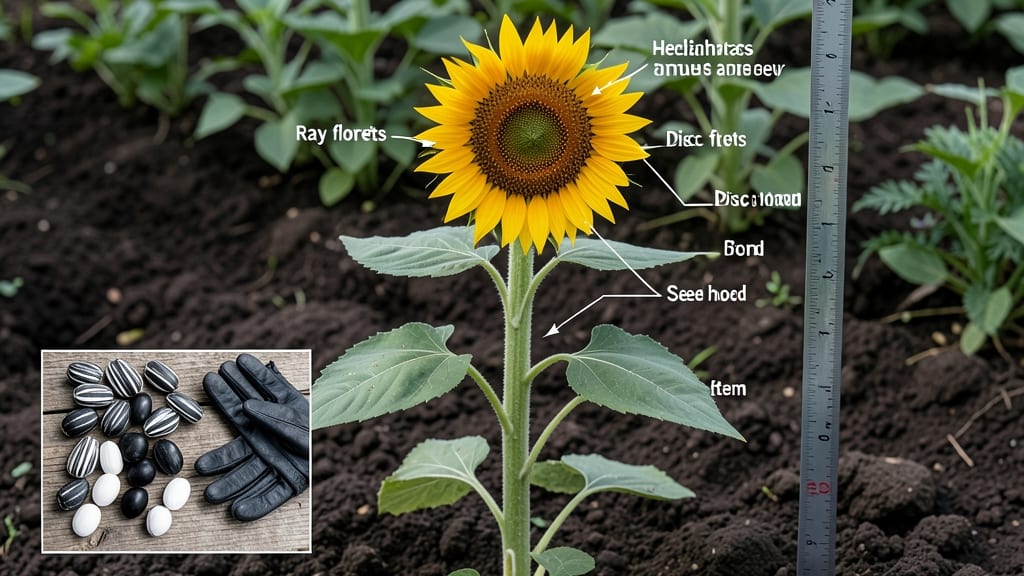
A sunflower seed identification chart saves you from guessing—and a summer of mismatched blooms. 🌻 I’ve grown enough sunflowers to know that ‘Mammoth Russian’ towers at 12+ feet while ‘Autumn Beauty’ stays compact but packs a rainbow of petals.
The difference isn’t just height; it’s in the seed head shape, petal patterns, and even how quickly they mature.
Most gardeners focus on petal color, but the real clues are in the seed heads: ‘ProCut’ has smooth, disc-shaped heads perfect for cutting, while ‘Teddy Bear’ grows fuzzy, oversized blooms that look like pom-poms.
Check leaf size too—‘Russian Giant’ has massive, rough leaves, while ‘Autumn Beauty’ stays sleek and slender. These traits make it easy to spot the right variety at the nursery or in seed packets.
Once you recognize the traits, you’ll know exactly which sunflower to plant for your space and goals—whether it’s tall shade for your fence, cut flowers for bouquets, or quick summer snacks from the seeds.
The chart breaks it all down so you can pick with confidence, no horticulture degree required.
Pro tip: Snap a photo of your seed packet before planting. When those first sprouts appear, you’ll match them to the chart in seconds—no more second-guessing what you grew. Ready to turn seed shopping into a sure thing?
📚 In This Guide
- What you need
- Instructions
- Tips and common mistakes
- Wrapping up and next steps
What you need
- ● Sunflower Seed Identification Chart: A printed or digital chart with key traits (leaf shape, stem texture, seed color, etc.). Pro tip: Laminate it for durability if working outdoors! 🌞
- ● Magnifying Glass (3x-10x): For close-up inspection of seed patterns, leaf veins, and tiny details. Spec: Handheld with adjustable focus.
- ● Measuring Tape or Ruler: To measure plant height, leaf width, and seed size. Spec: 6-inch tape measure or digital caliper for precision.
- ○ Notebook & Pen: For recording observations (height, color, growth stage, etc.). Optional: Use a waterproof notebook for fieldwork!
- ● Small Knife or Pruners: For safely harvesting seed heads or cutting stems for inspection. Spec: Sharp, clean tools to avoid damage.
- ○ Seed Samples (Optional but Helpful): Collect 3-5 seeds from each suspected variety for side-by-side comparison.
- ● Camera or Smartphone: To capture images of unique traits (e.g., striped leaves, unusual seed patterns). Pro tip: Use natural light for accurate colors! 📸
- ● Field Guidebook: A sunflower-specific guide (e.g., The Sunflower by Charles Heiser) for deeper insights.
- ● Gloves: Lightweight gardening gloves to protect hands while handling prickly seed heads.
- ● Portable Light Source: A small LED flashlight for inspecting seeds in low-light conditions.
- ● DNA Test Kit (Advanced): For hobbyists who want to confirm hybrid varieties (e.g., Seed Savers Exchange kits).
- ● Weatherproof Storage Bags: To preserve seed samples until identification is complete.
How to identify sunflower seed varieties using key traits
Recognizing sunflower types isn't just for breeders—it helps you choose the right seeds for your garden.
🌱 Step 1: Examine Seed Head Shape and Size
Begin with the most obvious trait: the flower head. Single-row varieties like 'Mammoth' have tightly packed seeds in a single circular layer, while multi-row types like 'Russian Giant' display concentric rings of seeds. Measure the diameter—commercial varieties typically range from 8-12 inches, while giant heirlooms can reach 16 inches or more.
Look at the curvature: upright varieties like 'Autumn Beauty' grow straight, while downy types like 'Teddy Bear' have slightly drooping heads. This distinction matters because upright varieties need staking, while drooping ones often self-support.
🌿 Step 2: Analyze Seed Color and Pattern
Seed color reveals variety secrets. Black oil sunflowers (like 'NuSun') have tiny, dark seeds perfect for bird feeders, while striped varieties like 'Moulin Rouge' show bold black-and-white patterns. Gray-striped seeds belong to confectionary types like 'Russian Mammoth', prized for roasting.
Check the seed coat texture: Smooth seeds indicate oil varieties, while ridged or striped seeds signal confectionary or birdseed types. This trait is your fastest way to sort seeds without testing.
☀️ Step 3: Note Leaf and Stem Characteristics
Leaf shape varies dramatically: Lance-shaped leaves (like 'Sunflower 'ProCut') are common in commercial types, while broad, heart-shaped leaves appear on giant varieties like 'Russian Giant'. Count the leaf segments—most varieties have 12-16 leaflets, but dwarf types like 'Teddy Bear' show 8-10.
Observe stem thickness: Thick stems (over 1 inch diameter) belong to giant varieties, while slender stems (under ½ inch) indicate dwarf or early-maturing types. This helps predict plant height before flowering.
⏰ Step 4: Assess Maturity Traits and Growth Habits
Timing matters for identification. Early varieties like 'Autumn Beauty' mature in 80-90 days, while late giants like 'Russian Mammoth' take 120-140 days. Watch for leaf senescence—when lower leaves yellow and drop, flowering is imminent.
Check branching: Single-stem varieties produce one main head, while multi-stem types like 'Teddy Bear' develop 3-5 smaller heads per plant. This trait determines spacing needs—single-stem types need 24 inches apart, while multi-stem varieties thrive in 12-inch clusters.
🌻 Step 5: Verify Through Seed Testing
For definitive identification, conduct a seed float test: Place seeds in water—oil seeds sink, while confectionary seeds float. This simple test separates birdseed types from roasting varieties. For precise variety matching, compare your findings against USDA sunflower variety databases or seed catalog descriptions.
Take photos of each trait (shape, color, leaf pattern) and cross-reference with sunflower breeders' guides. Many varieties share similar traits, so combining multiple observations yields accurate results.
Tips & tricks for perfect sunflower seed identification
These key insights will help you confidently recognize sunflower varieties in your garden—no botanist degree required.
Seed Head Shape Secrets: When examining flower heads in Step 1, remember that the concentric rings in multi-row varieties like 'Russian Giant' form as the plant matures. The outer rings are always the oldest seeds—this concentric pattern is your best clue for distinguishing between single-row and multi-row types. For accurate measurements, use a tape measure at the widest point of the head while it's still attached to the plant.
Color and Texture Clues: In Step 2, focus on the seed coat texture first—this is often more reliable than color alone. Smooth seeds are almost always oil varieties, while any visible ridges or stripes indicate confectionary or birdseed types. I've found that gray-striped seeds from 'Russian Mammoth' varieties often develop a faint blue tint when exposed to sunlight, which can help distinguish them from other striped types.
Leaf and Stem Visual Cues: For Step 3, count leaf segments by gently unfolding the leaves without damaging them. Use a magnifying glass if needed—some varieties like 'ProCut' have such fine leaflets that they're easy to miscount. Stem thickness is particularly telling: giant varieties with stems over 1 inch often have a hollow center when cut lengthwise, while dwarf types remain solid throughout.
Maturity Timeline Tips: When assessing maturity in Step 4, pay attention to the timing of leaf senescence—this is your most reliable indicator of flowering. Early varieties like 'Autumn Beauty' often show this trait 10-14 days before flowering, while giant varieties may take 3-5 days longer. For precise spacing, measure from the base of the stem to the first true leaves—this "planting depth" varies by variety and affects establishment.
Pro Tips for Sunflower Seed Identification Chart
- These key insights will help you confidently recognize sunflower varieties in your garden—no botanist degree required.
- Seed Head Shape Secrets: When examining flower heads in Step 1, remember that the concentric rings in multi-row varieties like 'Russian Giant' form as the plant matures.
- Color and Texture Clues: In Step 2, focus on the seed coat texture first—this is often more reliable than color alone.
Frequently asked questions
Got questions about identifying sunflower seeds or varieties? Here’s a quick guide to clear up common confusion—whether you're a gardener, farmer, or just curious about those golden blooms!
How do I tell the difference between black oil and striped sunflower seeds?
Black oil sunflower seeds have a sleek, dark hull and are often smaller, while striped varieties (like Russian Mammoth) feature bold white or black stripes on their hulls. Black oil types are typically used for bird feed or oil extraction, whereas striped seeds are prized for their large, edible kernels.
When is the best time to harvest sunflower seeds for planting?
Harvest seeds when the back of the flower head turns yellow and the petals droop (usually 45–55 days after planting). Wait until the seed heads are fully dry and brittle—squeeze a seed: if it cracks easily, it’s ready! Harvest on a dry day to prevent mold.
Can I plant sunflower seeds straight from store-bought sunflower butter?
Nope! Store-bought sunflower butter is processed and often contains additives. For planting, use seeds from a trusted seed supplier or harvest them yourself. Look for untreated, non-hybrid seeds labeled for gardening to ensure viability and variety accuracy.
Why are birds eating my sunflower seeds before I can harvest them?
Birds love sunflower seeds—especially black oil types! To deter them, cover seed heads with bird netting or harvest early in the morning. For stubborn flocks, try striped varieties, which mature faster and may evade feathered thieves slightly longer.
How do I measure sunflower seed size for planting depth?
Most sunflower seeds are about ½ inch long. Plant them 1 inch deep in well-drained soil. Use a ruler or your finger (a standard fingertip is roughly 1 inch) for consistency. Larger seeds (like Mammoth varieties) can go slightly deeper—up to 1.5 inches.
Wrapping up and next steps
Mastering sunflower seed identification opens up a world of gardening possibilities—whether you’re growing for beauty, wildlife, or harvest! With this chart, you’ve learned to spot key traits like leaf shape, stem texture, and seed head size, ensuring you pick the perfect variety for your needs. 🌻
Now that you’re equipped with the knowledge, why not put it to use? Start by planting a few varieties side by side and observe their growth. Document your findings—you might just uncover a new favorite! Happy gardening! 🌱